
Technical Articles
Diaphragm Coupling Spacer Replacement on Condensate Pumps: Length, Fit and Bolt Interface Checks
A condensate pump comes down for a seal job or a vibration check, and the diaphragm coupling spacer turns out to be cracked, corroded or missing a fitted bolt. The hubs are fine, the motor is aligned, and nobody wants to move either, so the job becomes buying a spacer that drops into exactly the same gap. That only works if length, flange locations and bolt interface all match the hubs you keep, and a matching outside diameter proves very little. Here is what to measure, confirm and send when ordering a spacer for a Diaphragm Coupling.
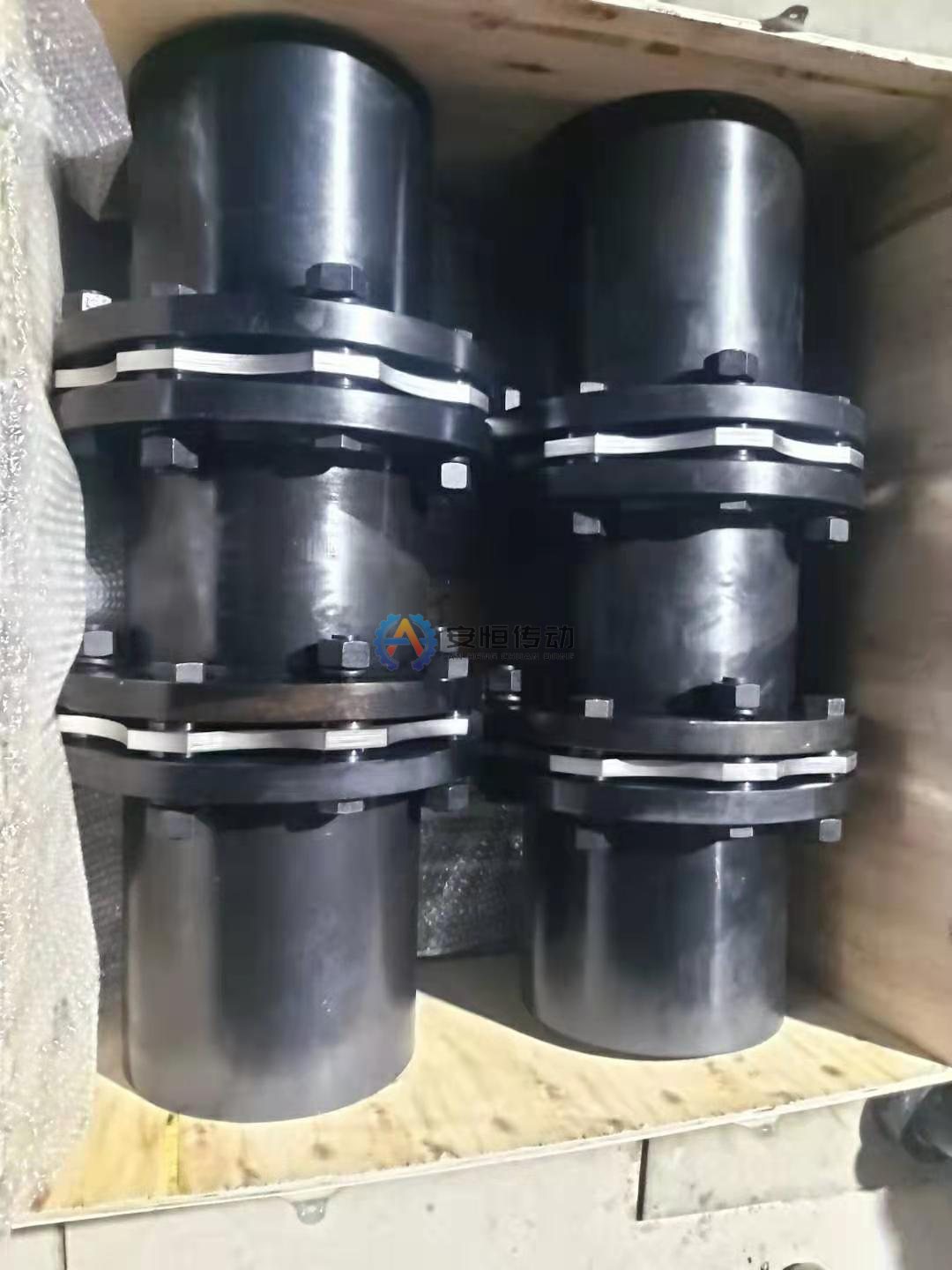
Decide what you are replacing
Settle the scope first, because each option carries different interface risks. The table shows the usual cases.
| Scope | Stays in place | When it makes sense | Must be confirmed |
|---|---|---|---|
| Diaphragm packs only | Hubs and spacer | Packs cracked or fretted, spacer flanges and holes undamaged | Pack thickness, lamination configuration, hole pattern, bushings and bolts |
| Spacer assembly | Hubs and alignment | Spacer damaged, or packs seized onto it | Length, registers, bolt pattern, pack design, balance |
| Complete coupling | Shafts only | Hubs worn or damaged, no drawing, interchangeability unclear | Bores, keyways, full geometry, speed rating |
Interchangeability between makers is never automatic. Two spacers can share an outside diameter and bolt count while the register fit, pack stack-up or bolt design differs, so any mix of old hubs and a new spacer has to be confirmed on the actual structure. If you are re-specifying the whole coupling, our pump and fan diaphragm coupling selection guide covers that decision.
Measure the gap: shaft ends, spacer length and flange locations
The key dimension is the distance between shaft ends with the pump rotor and motor in their running positions. Record it together with how far each hub sits from its shaft end, because the spacer length is set by the distance between hub flange faces, not by the shaft gap alone. On many vertical condensate pumps the coupling also sets the rotor's axial position, so if the old spacer has an adjusting plate or nut, record that setting before anything is loosened.
Next, measure the locating features on both hub flanges: register diameter, register depth and whether each hub carries the male or female spigot. A register that is slightly too long means the spacer cannot go in without overcompressing the packs, and one that is too short leaves the flange centred only by the bolts.
Then record the bolt interface. Diaphragm couplings usually alternate bolts between hub and spacer on the same circle, so note the bolt circle diameter, hole count and size, which holes belong to which part, and whether the bolts are fitted bolts or clearance bolts with bushings.
Why the outside diameter is not enough
The diaphragm pack decides more of the fit than its outline suggests. Pack thickness and the number and thickness of laminations set the axial stack-up between flanges and the grip length of the bolts. Fit a thicker or thinner pack and the spacer either will not go in or sits with the packs bowed.
Many couplings are designed to be installed with a defined axial pre-stretch or pre-compression, so that thermal growth of pump and motor brings the packs close to neutral when running. That allowance is already in the drawing length of the spacer, which is why copying a spacer from a measured old part can be wrong even when the measurement is perfect.
Fasteners differ as well. Fitted bolts have a specific shank length and tolerance, bushings and washers may be shaped to clamp the pack in a particular way, and the tightening torque depends on bolt grade and thread. Mixing old bolts with a new spacer, or new bolts from another design, is a common cause of early pack cracking.
Review speed, balance, orientation and axial space
Before ordering, go through these points with whoever owns the pump. Each one can make a dimensionally correct spacer unusable.
- Speed: the replacement must be rated for the highest speed the drive can reach, not just the nameplate speed.
- Balance: confirm whether the spacer is balanced alone or as an assembly with packs and bolts, and what the pump specification requires.
- Match marks: old balance and orientation marks do not carry over; the new spacer needs its own.
- Assembly direction: note which flange faces the pump, which side the bolt heads sit on, and the clearance to the coupling guard.
- Axial space: check that the packs can be compressed enough to clear the registers, or that the design has compression bolts for installation.
- Thermal growth: the cold gap and the running gap differ, so confirm the pre-stretch or pre-compression the coupling was designed for.
If the pump runs on a frequency converter, take the converter's maximum speed into the check, not the motor nameplate. For a structured way to compare ratings with the drive, see coupling speed rating and critical-speed screening.
What to send with the inquiry
Send photos of the installed coupling from both sides, close-ups of markings on spacer and hubs, bolt heads and nuts, the edge of a pack where the laminations show, and the damage itself. Add the pump and motor data sheets and the coupling drawing if you have one. The measurement sheet below covers the rest.
| Item | Where to measure | Note |
|---|---|---|
| Distance between shaft ends | Pump shaft end to motor shaft end | Rotor in running position |
| Hub position | Shaft end to hub flange face, both sides | Hubs stay in place |
| Spacer overall length | Flange face to flange face | Include any adjusting plate |
| Registers | Diameter and depth on both hubs | Male or female |
| Bolt pattern | Bolt circle, hole count and hole size | Hub holes versus spacer holes |
| Fasteners | Bolt, bushing, washer and nut sizes | Grade and shank length |
| Diaphragm pack | Thickness and lamination configuration | From a new or undamaged pack |
If the old spacer is bent, stretched or burned, do not take critical dimensions from it. Take the bolt circle, hole size and register dimensions from the hub flanges, which are the parts that stay, and derive the spacer length from the shaft-end distance and hub positions, using the damaged part only as a cross-check.
Our Diaphragm Coupling range covers the JMII, JMIIJ, DJM and SJM series, but for a spacer on existing hubs we work from your measurements and drawing rather than forcing a catalogue size onto your machine. If the measurements show the old design cannot be matched with confidence, we will say so and suggest replacing the complete coupling instead.
FAQ
Can I fit a diaphragm pack from a different supplier?
Only if thickness, lamination configuration, hole pattern, hole size and the bushing and bolt design all match, which usually means having the original drawing or the old pack in hand. The same outside diameter and bolt count is not enough.
The old spacer is damaged. Where do I get the length?
From the distance between shaft ends and the position of both hubs, plus the pack thickness and any pre-stretch the design calls for. The pump or coupling drawing is the better source if it exists; the damaged spacer is only a cross-check.
Does a replacement spacer need balancing?
On condensate pumps it usually does, and the pump specification normally sets the requirement. Ask whether the spacer is balanced alone, so it can be interchanged, or as an assembly with its packs and bolts, and keep the balance marks aligned at installation.
If you are planning a spacer or pack replacement around an outage, send us the photos, the measurement sheet and any drawings you have. We can make the parts from your drawing or from photos and measured dimensions of the old parts, balance them with a dynamic balancing report and supply a dimensional inspection report; standard models usually ship in 15–25 days, non-standard spacers are confirmed after drawing review, and urgent orders can be prioritised because the machining is done in-house. Send us your drawing
Need an engineering selection or replacement review?
Send power, speed, shaft diameters, keyway, installation dimensions, drawings or old-part photos. We will review the working condition before confirming the model and quotation.