
Technical Articles
Steel Rolling Mill Gear Coupling Selection and Maintenance: Torque, Bite Shock Loads, and Uneven Wear
First Identify the Coupling’s Position in the Drivetrain
Roughing-mill main drives, finishing mills, coilers, flying shears, straighteners, and roller tables have different load spectra. The operating speed and torque from the same motor also differ between the gearbox input and output. Before selection, draw a simple motor-coupling-gearbox-driven-machine diagram and mark the coupling’s shaft section, reduction ratio, direction of rotation, and braking position. Otherwise, even with the correct motor power, the operating speed from the wrong shaft section may be used in the calculation.
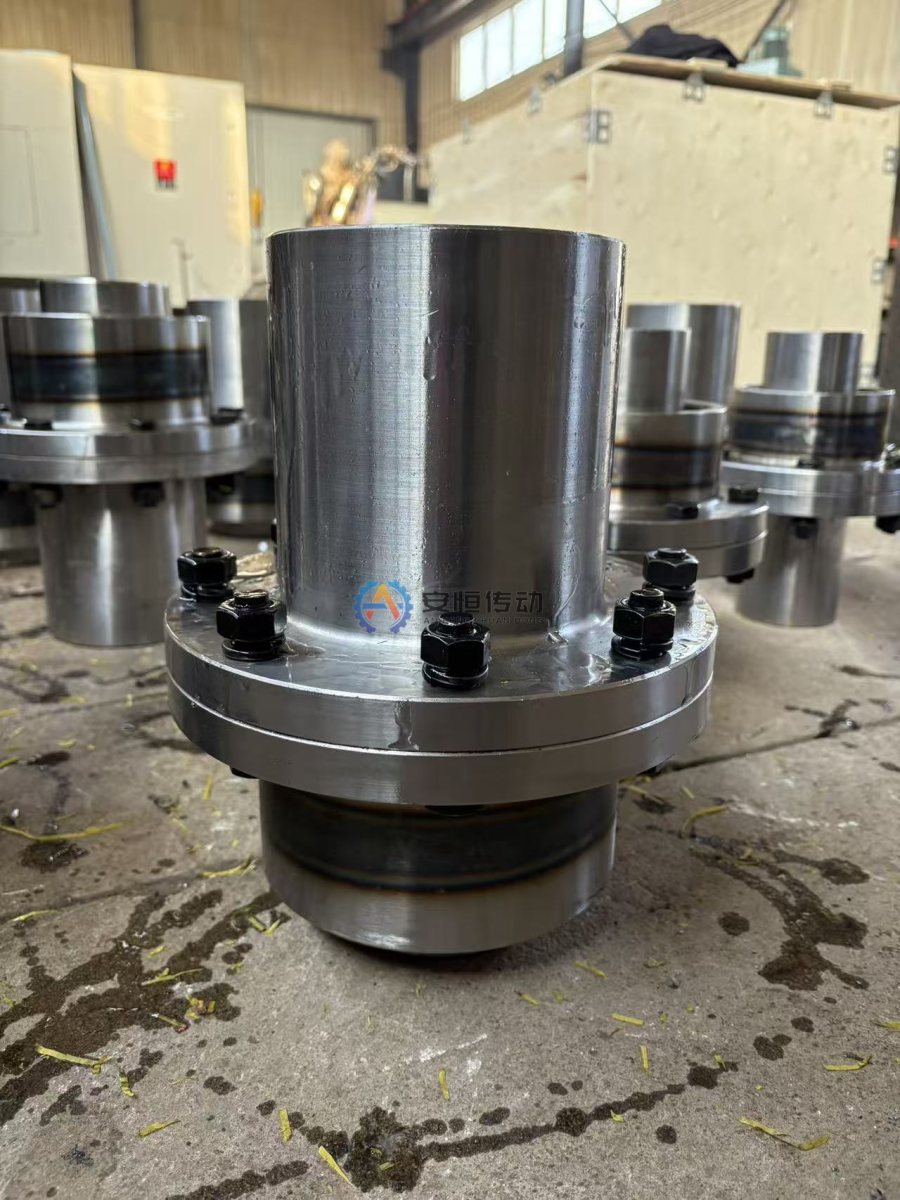
Steady-State Torque Is Only the Starting Point:Bite and Reversing Peaks Govern Verification
Estimate basic torque using `T = 9550P/n`, where `P` is the motor power transmitted under the specified operating condition and `n` is the operating speed of the shaft section containing the coupling. Final verification should also cover bite, tail-out, rapid reversing, braking, roll-gap adjustment, and abnormal jamming. Do not apply one service factor to every duty position. Determine the factor from the relevant product data, equipment design information, and recorded site loads.
| Duty position or event | Data to review | Effect on the coupling |
|---|---|---|
| Roughing-mill bite | Peak current/torque, duration, and billet condition | Short-duration high loads on the teeth, key, and bolts |
| Continuous finishing-mill operation | Load fluctuation, maximum operating speed, and torsional vibration | Fatigue, heat generation, and shaft-train dynamics |
| Coiling | Coil diameter, tension, full-coil inertia, and braking | Torque changes through the process stages |
| Frequent roller-table starts and stops | Starts/stops per hour, jammed rollers, and synchronization control | Repeated shock and keyway fretting |
| Abnormal jam | Protection response and locations of previous damage | Indicates whether separate overload protection is required |
If the control system can export current, operating speed, and fault timestamps, correlate them with the timeline of broken teeth, loose bolts, or keyway wear. Simply selecting a larger size may shift the weak point to the drive shaft, gearbox, or bearings.
Verify the Shaft Bores, Keyways, and Hubs Separately
Peak torque in a steel rolling mill drive is carried not only by the tooth surfaces, but also through the shaft bores, keys, bolts, or other connecting components. Provide the shaft diameter, shaft extension length, keyway dimensions, fit, shaft-shoulder fillet, and installation direction for both ends. If an existing hub shows reddish-brown wear debris, crushing on the key flanks, or scoring in the shaft bore, measure the shaft end and investigate the cause of fretting. Do not copy a worn bore diameter into the new part.
Imported or upgraded production lines may use special flanges, intermediate shafts, extended hubs, or nonstandard bore patterns. If the available data are incomplete, first measure the existing coupling, then decide whether to use a standard Gear Coupling or a custom replacement based on the drawing.
Alignment and Thermal Movement: Acceptable Cold Alignment Does Not Guarantee Acceptable Running Alignment
Mill stands, gearboxes, long shafts, and bearing housings move under temperature and load. Maintenance records should distinguish initial cold alignment, thermal offset after warm-up, and axial displacement. Crowned teeth can improve contact under slight misalignment, but they cannot withstand long-term misalignment beyond the limits shown on the dimensional drawing. Uneven wear on one side of the tooth face, heat on one side of a seal, or repeatedly loosening bolts are all signals to recheck the shaft-train position.
Dust, Moisture, and Mill Scale Change Lubrication Conditions
A Gear Coupling depends on effective lubrication and sealing. During inspection, do not stop at checking whether grease is present. Determine whether the lubricant has thinned, caked, absorbed water, or contains mill scale or metallic wear particles, and identify the contamination path. Adjust replacement intervals to the design, operating speed, temperature, and site findings instead of applying one calendar interval to every duty position.
Include the following checks in every planned outage:
- Before disassembly, record temperature, vibration, abnormal noise, leakage direction, and bolt witness marks;
- Inspect seals, covers, lubrication connections, and any contact with the coupling guard;
- Track trends in the tooth contact pattern, pitting, scoring, and backlash;
- Check the hub’s axial position, keyway contact, flange seating, and fasteners;
- Recheck bearing clearance, foundations, cold/hot alignment, and axial displacement;
- Record lubricant grade, fill quantity, sample condition, and reason for replacement.
For a more complete symptom-to-root-cause path, see Gear Coupling Failure Troubleshooting.
When to Reassess Selection or Add Protection
If teeth repeatedly break, keyways loosen, shaft bores wear, or bolt holes deform at the same position, recheck the load spectrum, service factor, shaft-end connection, and installation condition. If abnormal jamming is the primary risk, also evaluate a Safety Coupling or Torque Limiter Coupling instead of expecting a standard Gear Coupling to provide disconnect protection.
The technical review package should include the steel rolling mill duty position, drivetrain diagram, motor power, operating speed at each shaft section, bite and reversing records, basis for peak values, shaft-end drawings, distance between shaft ends (DBSE), thermal movement, original model, maintenance intervals, lubricant, overall photographs of failed parts, and close-up images of the tooth surfaces. The final solution should verify the rated torque, allowable speed, shaft bores, installation dimensions, permissible misalignment, lubrication and sealing, and inspection requirements item by item. Only then can it address both selection and recurring failures.
FAQ | Steel Rolling Mill Gear and Maintenance
Why should bite-in and reversing peaks be recorded separately in a rolling mill?
They are short events with a different torque path from steady rolling. Recording direction, duration and repetition helps separate a coupling duty problem from a reducer, roll or alignment problem.
Does a quiet gear coupling prove that the mill drive is healthy?
No. Check tooth contact, keyway fretting, hub fit, lubricant condition and running alignment. A quiet drive can still carry a loose fit or a damaged seal after a shock event.
Need an engineering selection or replacement review?
Send power, speed, shaft diameters, keyway, installation dimensions, drawings or old-part photos. We will review the working condition before confirming the model and quotation.