Technical Articles
Chain Coupling vs Gear Coupling for Low-Speed Cement Plant Conveyors
At the reducer output of a clinker pan conveyor or bucket conveyor, the coupling turns slowly but carries high torque, sits in hot abrasive dust and must survive loaded starts and the odd chain jam. Cement plants use both roller chain couplings and gear couplings in that spot, and both can work. The right choice depends on torque and shock, direction of rotation, space, and how much maintenance the plant can realistically give.
How the two couplings carry torque
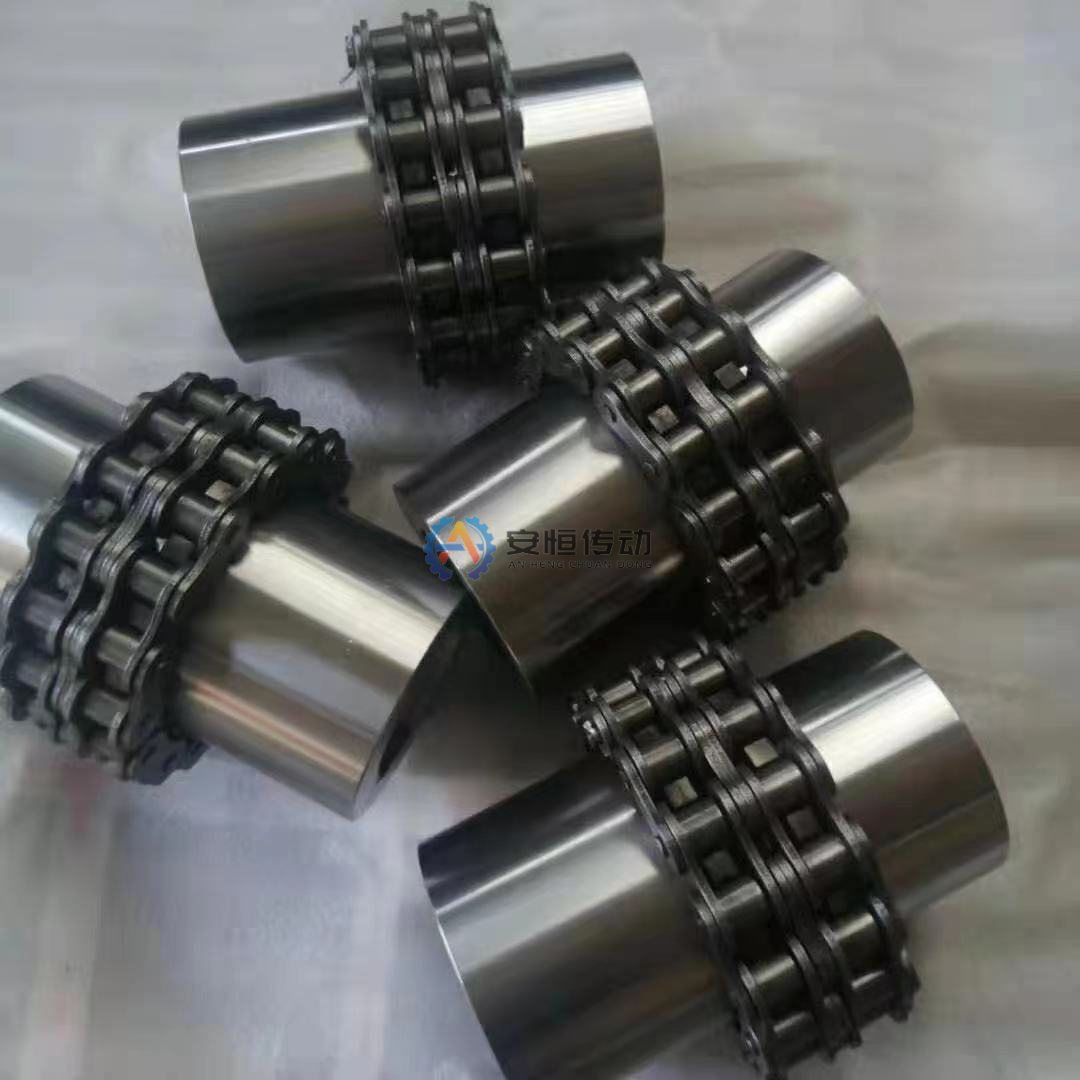
A Roller Chain Coupling uses two sprocket hubs wrapped by a duplex roller chain, usually inside a cover that holds the grease and keeps dust out. Torque passes from the sprocket teeth through the chain rollers, and the clearances between chain and sprockets let it accept slight angular and parallel misalignment.
A Gear Coupling uses hubs with crowned external teeth meshing in sleeves with internal teeth, sealed and filled with grease. Many teeth share the load at once, so it carries more torque for a given outside diameter, and the crowned teeth let the hubs tilt in the sleeves, which gives more angular, parallel and axial misalignment capacity than a chain coupling.
| Point | Roller chain coupling | Gear coupling |
|---|---|---|
| Torque for a given outside diameter | Moderate | High |
| Misalignment capacity | Small | Larger, including axial movement |
| Backlash | Noticeable, grows as the chain wears | Small |
| Reversing and heavy shock | Not recommended | Better suited |
| Disassembly | Remove the chain, shafts stay in place | Slide the sleeves back, needs axial space |
| Lubrication | Grease in the cover, chain wear to check | Sealed grease, regular regreasing |
What a low-speed clinker conveyor asks of the coupling
At the reducer output speed is low and torque is high, and the conveyor usually starts loaded, so every start pushes the coupling through a breakaway torque well above running torque. Occasional chain jams, when a bucket or pan catches, add peak torque beyond anything seen in normal running.
Clinker dust is fine and abrasive, and the area near a hot conveyor gets hot. Dust that reaches a chain or gear teeth turns grease into grinding paste, and heat ages grease and seals faster. Either coupling copes only if its cover or seals stay tight; a chain coupling with a plastic cover is a poor choice near hot clinker, so ask for a metal cover with heat-resistant seals.
Direction matters too. A conveyor that only runs forward suits a chain coupling, while one reversed to clear jams takes up the backlash in both directions, which hammers chain rollers and sprocket teeth.
Maintenance compared
A roller chain coupling needs grease in the cover, tight cover seals and regular checks of chain wear. As the chain elongates and sprocket teeth wear, backlash grows and the coupling knocks on starts; check backlash by rocking one hub against the other, and replace the chain, plus the sprockets if their teeth are hooked, before it gets that far.
A gear coupling needs intact seals and fresh grease at the manufacturer’s interval, shortened in hot, dusty areas. When seals fail, dust and heat dry out the grease and the teeth wear fast, so grease streaks or dust at the seals are a warning, not a cosmetic issue.
In short, the chain coupling is easier to inspect and cheaper to renew, since a new chain restores most of its condition, while a gear coupling with good seals needs attention less often but costs more once its teeth wear. Rising noise or vibration at either coupling is a useful clue when combined with a backlash check, but it does not measure wear on its own.
Which one to choose
Choose a roller chain coupling when the drive runs in one direction, shocks are moderate and infrequent, there is radial room for the size needed, and quick disassembly and low spares cost matter. For example, on a clinker pan conveyor that runs forward only, starts loaded but rarely jams, a covered chain coupling sized with a sensible service factor is a reasonable, economical choice.
Go for a gear coupling instead when any of the following applies. One of them is enough to rule out a chain coupling at that position.
- The drive reverses, in normal operation or to clear jams.
- Jams or other heavy shocks are frequent, so peak torque far above running torque is routine.
- Space is tight and the torque has to fit into a smaller outside diameter.
- Misalignment or axial movement between reducer and head shaft exceeds what a chain coupling accepts.
Neither type absorbs shock, so if jams are frequent, fix the cause at the conveyor and consider a torque limiter whose slip torque or release torque sits above the breakaway torque of a loaded start but below the coupling’s allowable peak torque. Size either type against the real peak torque with a suitable service factor, not motor rated torque alone. Our roller chain couplings come in GL (GL1–GL15) and KC (KC3812–KC40028) series, and our gear couplings in CL (CL1–CL19) and CLZ (CLZ1–CLZ19) series with bores from 18 to 560 mm across the range; ratings depend on the size.
Swapping one type for the other on site
Switching from a chain coupling to a gear coupling, or back, is common when a drive is upgraded or one type keeps failing. The two types rarely share the same overall length, hub length or outside diameter, so check the installation before ordering instead of assuming a like-for-like fit.
- Bore diameters, keyways and fits on both the reducer output shaft and the conveyor head shaft.
- Hub length against shaft engagement length, and the gap between shaft ends the new coupling needs.
- Outside diameter against guards, frame members and the reducer housing.
- Axial room to slide gear coupling sleeves back, or room to remove a chain coupling cover and chain.
- Torque, speed and misalignment ratings of the new coupling against the real duty.
If the shaft gap does not suit the new coupling, choosing a different hub length or custom hubs is usually easier than moving the reducer. We check torque, speed, shaft diameter, keyway, service factor, misalignment and the working environment before picking a size, and we can make replacements from drawings or from photos and measured dimensions.
FAQ
Is a chain coupling cheaper than a gear coupling?
Usually, both to buy and for spares, because a worn chain can be replaced on its own. Over time it depends on the duty: on a reversing or shock-loaded drive, a chain coupling that needs frequent new chains and sprockets can end up costing more.
Can a chain coupling run without its cover?
Not in a cement plant. Without a cover the grease is flung off and clinker dust goes straight into the chain, so wear accelerates quickly.
Does a gear coupling handle more misalignment?
Generally yes, thanks to its crowned teeth, and it copes better with axial movement too. Running either coupling near its misalignment limit still shortens its life, so align properly instead of relying on the coupling’s capacity.
If you are choosing between the two for a clinker conveyor or another low-speed cement plant drive, start from direction of rotation, jam frequency and available space, then size against the real peak torque. Standard sizes ship in as little as 10 days and copies made from an old part take from 20 days, and a material certificate (mill test certificate) and dimensional inspection report can be supplied with the shipment. Send us your drawing with shaft sizes and motor and reducer data, and we will recommend the type and size.
Need an engineering selection or replacement review?
Send power, speed, shaft diameters, keyway, installation dimensions, drawings or old-part photos. We will review the working condition before confirming the model and quotation.