
Technical Articles
Curved Jaw Coupling Spider Replacement on Blast Furnace Hydraulic Units: Survey, Hardness and Spares
Hydraulic units for the mud gun and taphole drill sit closer to radiant heat and dust than most pump sets in a steel plant, and their curved jaw couplings show it: spiders harden, crack and crumble far sooner than on a cooling-water pump. Before the annual overhaul, the maintenance team wants one order that covers every unit around the furnace, including the furnace top hydraulic unit. That order tends to go wrong in three ways: spiders bought by color, hubs ordered without bore data, and quantities guessed. Here is how to get it right the first time.
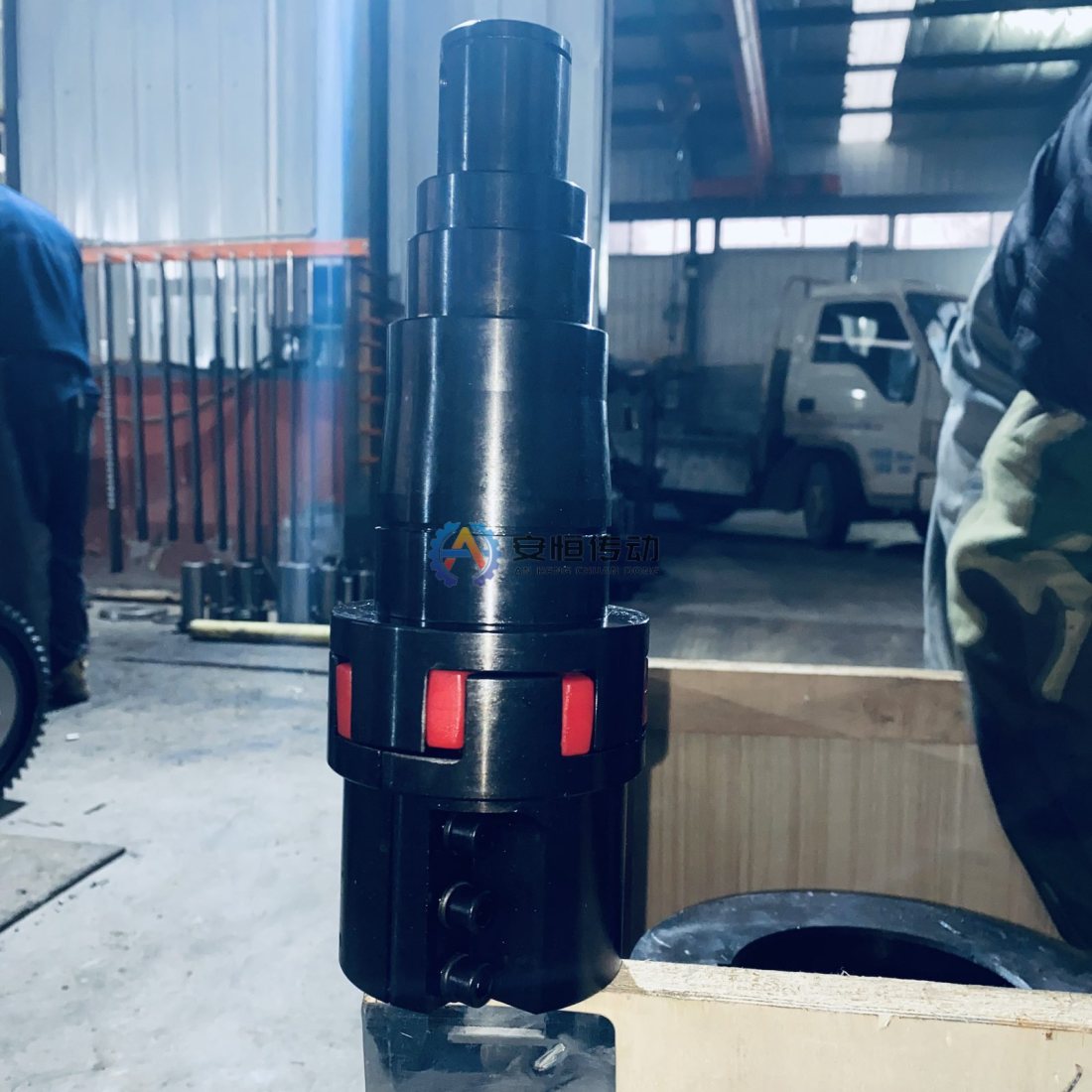
Survey every unit and build one ledger
Walk the casthouse and the furnace top during a stop and record each coupling as installed, not as drawn. Pumps replaced after a failure often came with a different coupling, and the drawing was never updated. For each unit, record:
- Unit and duty: mud gun, taphole drill or furnace top hydraulic unit, and which pump on that unit.
- Size code and type marking on the hubs, if still readable.
- Hub form on each side: standard keyed hub, clamping hub or flange hub.
- Bore, keyway and shaft fit on the motor side and the pump side.
- Spider hardness marking, color and arm count.
- Installation length: hub positions relative to the shaft ends and the gap between the hubs inside the bell housing.
- Date of the last spider change and the condition of the spider that came out.
Keep one spreadsheet for the whole furnace. It drives the overhaul order, and the next person who opens a bell housing on a night shift will not have to guess.
Read the hardness marking, not the color
The spider's hardness sets how much torque the coupling carries. On our curved jaw coupling range, sizes XL0 to XL16, the rated torque (listed as nominal torque Tn) applies to a 92 ShA spider, and a 98 ShA spider carries about 70% more. The softer spider damps pump pressure pulses better and accepts slightly more misalignment; the harder one passes more shock to the pump shaft and bearings and needs closer alignment.
Color is not a reliable identifier, because manufacturers use different color codes. Look for the hardness marking molded into the spider; if it is worn or burnt off, check an unused spare in the store or the original unit documents. A durometer reading on a heat-aged spider shows its present state, not what was originally fitted.
Do not mix parts from different makers. Curved jaw couplings from different suppliers can look alike and carry similar size numbers while their jaw profiles and spider dimensions differ, and a spider that almost fits runs with edge loading and fails early. Straight jaw spiders are another design entirely, as our comparison of curved and straight jaw couplings explains.
Check the temperature before choosing the spider material
Our standard curved jaw coupling is rated for a working temperature of −35 °C to +80 °C, and that range applies at the coupling itself. Inside a bell housing facing the taphole, the temperature can be well above the pump room air, and elastomer stiffness and torque capacity drop as temperature rises.
Measure during normal casting rather than in a cold shutdown: take a contact or infrared reading on the bell housing, and on the spider at the next short stop. Judge the readings together with the condition of the spiders you remove. Typical scenario: a mud gun unit stands behind a wall facing the taphole, with radiant heat on one side of its bell housing; its spider hardens and cracks while the same size on the furnace top unit stays elastic.
If readings approach or exceed the rated temperature range, a harder spider is not the answer. Reduce the heat input first with a heat shield on the furnace side and a guard that is ventilated but keeps abrasive dust out of the jaw gaps. If the temperature is still too high, ask for a spider material rated for the measured temperature and have its rated temperature range confirmed in writing in the quotation.
Spider only, or the whole coupling?
Replacing only the spider makes sense when the hubs are still sound. Mark both hubs and turn one against the other by hand in both directions: free play points to a worn spider, while steps worn into the jaw flanks mean the hubs are worn as well.
| What you find | What to order |
|---|---|
| Spider hard, cracked or worn; jaw flanks smooth; hub tight on its shaft | Spider only |
| Steps in the jaw flanks, or cracks at the jaw roots | Hub(s) plus a new spider |
| Hub moves on the shaft, fretting rust in the bore, worn keyway | New hub; check the shaft and key before fitting |
| Spider melted or charred | New spider after finding the heat or overload source; inspect the jaws for heat damage |
Jaw-root cracks start small and end with a jaw breaking off, often at the peak torque when the mud gun pushes clay into the taphole. A new hub also needs bore data: cylindrical bores are our standard, keyways are cut to your drawing, and a taper bore is supplied only after a strength check.
Set spare quantities and merge similar sizes
Base quantities on your own records. Count the spiders each unit used between the last two overhauls, treating the units nearest the taphole separately because they set the pace. Stock enough spiders for the expected replacements until the next overhaul, plus at least one complete coupling for each size whose failure would hold up casting.
Units with the same size code and spider hardness can share spider stock even when their bores differ; only the hubs stay unit-specific. If the casthouse has collected couplings from several makers, consider converting every unit to one series, such as our curved jaw coupling range, during this overhaul. That costs a set of hubs now, but afterwards one spider size covers several units; check first that the installation length fits each bell housing.
Store spare spiders sealed, cool and dark, away from welding and heat, and use the oldest first. A spider kept on a casthouse shelf ages before it is ever fitted.
What to send for one complete quotation
A complete RFQ lets us quote every line in one pass instead of returning questions unit by unit. Send:
- The ledger, one line per coupling.
- Photos of each coupling installed and dismantled: spider marking, hub jaws, bore and keyway, with a ruler in view.
- Nameplate photos of the motor, pump and hydraulic unit.
- The overhaul window and the date the parts must be on site.
- The documents you need, such as a material certificate (mill test certificate) or a dimensional inspection report.
Standard sizes ship in as little as 10 days; copies made from an old part take from 20 days. Non-standard items are assessed against the drawing, and the delivery time is stated in the quotation. Metal parts get a black oxide finish and rust-preventive oil and are wrapped in plastic film, then packed in an export wooden case and delivered to your freight forwarder’s warehouse in China.
FAQ
Should I switch to 98 ShA spiders so they last longer near the taphole?
Only if torque is the cause, for example spiders crushed or squeezed out of the jaws by the peak torque during plugging. A 98 ShA spider carries about 70% more torque but is stiffer, so check that the pump bearings and alignment can take the extra shock before switching. It does not raise the temperature limit; if spiders harden and crack from heat, deal with the heat first.
Will your spiders fit the hubs already installed?
Only when the jaw geometry matches. Send photos and dimensions of the hub jaws and the old spider, and we will tell you whether a spider alone is safe or a complete coupling is the better order.
How do I record the installation length inside a bell housing?
Before pulling the motor, measure from the motor flange face to the motor-side hub face and from the pump mounting face to the pump-side hub face, and note where each hub sits relative to its shaft end. Together with the gap between the hub faces, that is enough to check that a replacement fits the existing housing.
Start the survey early enough to leave time for one round of questions plus the delivery time. When the ledger and photos are ready, send us your coupling list and photos and we will quote spiders, hubs and complete couplings together.
Need an engineering selection or replacement review?
Send power, speed, shaft diameters, keyway, installation dimensions, drawings or old-part photos. We will review the working condition before confirming the model and quotation.