Technical Articles
Why Do Nylon Pins Keep Shearing on Furnace Roller Table Couplings? A Step-by-Step Check
When the nylon pins in a furnace exit roller table coupling shear again and again at the same position, fitting new pins is not a fix. On an elastic pin gear coupling the pins are meant to be the weak link, so a repeat failure means something else is wrong: slab impact, a dragging roller, heat, misalignment or the wrong pins.
Why the furnace exit roller table is hard on pin gear couplings
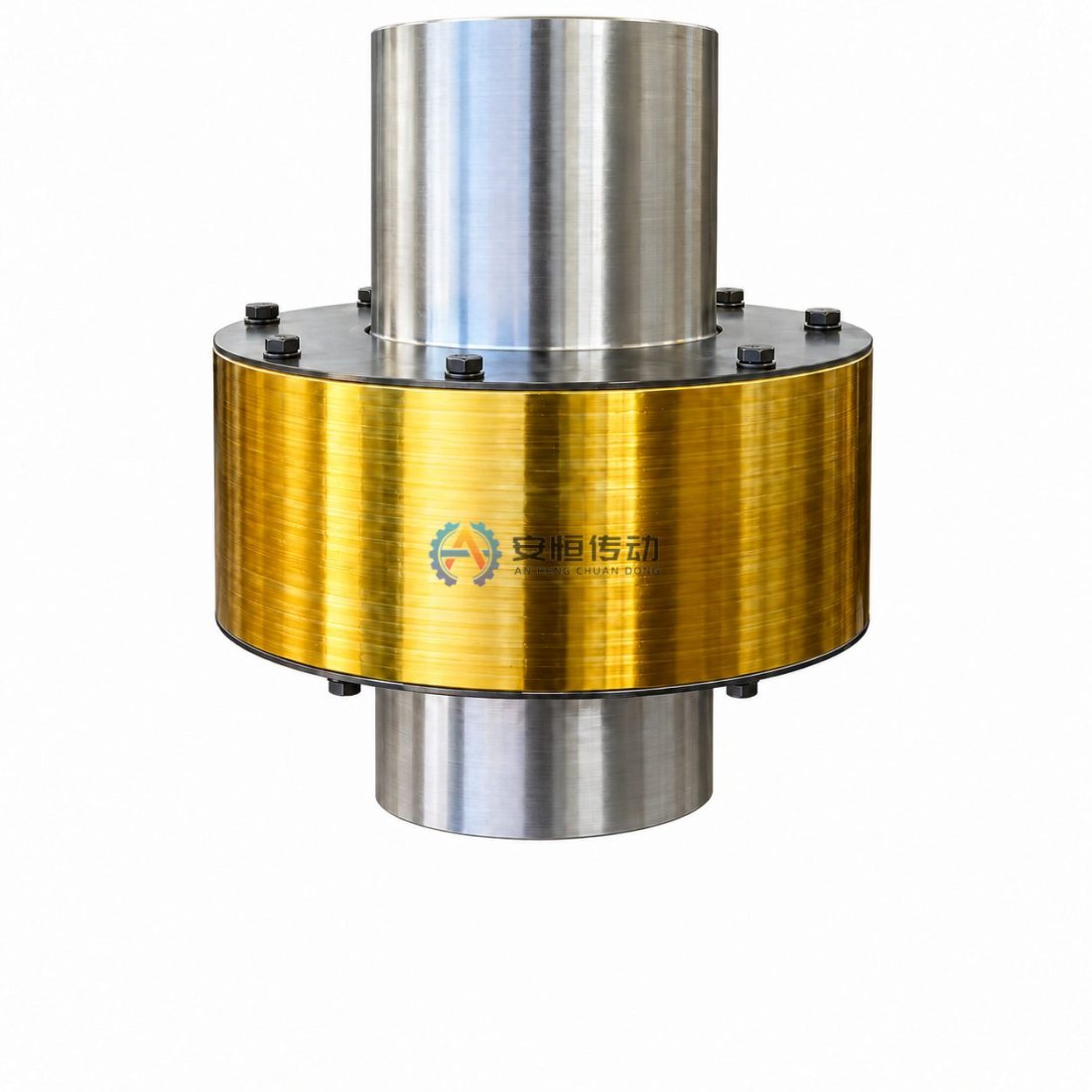
An Elastic Pin Gear Coupling transmits torque through nylon pins seated in matching grooves in the hubs and the outer sleeve, with retaining rings at both ends holding them in place. It tolerates some misalignment and absorbs shock, which suits roller table drives, but every load passes through the pins in shear.
The furnace exit combines everything the pins dislike. Slabs drop or are pushed onto the first rollers with real impact, the table reverses frequently during positioning, and the rollers near the furnace door sit in strong radiant heat. Each reversal also takes up the clearance between pins and grooves, so the pins are hammered from both sides.
Read the broken pins first
Keep all the pins from the failed coupling in their positions and look at them before anything else. Note the roller position, whether it has failed before, and whether the retaining rings were still in place.
| What the pins look like | What it usually means |
|---|---|
| Clean, flat shear on all pins in one plane, little deformation | One overload: slab impact, a roller locking suddenly, or a hard reversal |
| Pins bulged, squeezed into the grooves, glazed or discoloured | Heat softening from radiant heat or friction heat |
| Pins worn thin or waisted, nylon dust inside the sleeve | Sliding from misalignment, loose fit or reversal hammering |
| Pins walked out axially, some missing, the rest sheared | Missing or loose retaining rings, or axial push from thermal growth |
Mixed patterns are common. Worn or softened pins shear at a much lower load than new ones, so treat the weakening, not the last impact, as the root cause.
Typical scenario: on a discharge table, the couplings on the first rollers past the furnace door shear pins far more often than the rest. That points to something local, such as the slab drop position, radiant heat or one roller’s bearings, rather than to the pin supply as a whole.
Mechanical checks: rollers, bearings and retaining rings
With the drive isolated, turn the roller by hand or with a bar. A roller that drags, binds at one point or needs far more breakaway torque than its neighbours usually has a failing bearing, a bent shaft, or steel and scale stuck to the roller face and rubbing on a side guide or the frame.
When a roller locks while its motor keeps driving, the pins see the motor’s peak torque, and shearing them protects the motor and gearbox. Check the roller bearings for heat, noise and play, and confirm cooling and lubrication are working on water-cooled rollers. A rising current trend on one drive is a useful clue when combined with the hand-turn check, but it does not tell you the pin load.
Then check the retaining rings. Missing rings, loose bolts, or rings left off after the last pin change let pins walk out, and once a few are gone the rest carry the whole load and shear.
Heat: radiant load and thermal misalignment
Nylon softens and creeps as its temperature rises, so a coupling in direct view of the furnace door can lose pin strength with no change in load. Combine surface temperature readings taken right after a stop with what the pins look like; a hot sleeve on its own does not prove heat failure.
Heat also moves shafts. The roller and its bearing housings grow as they warm up while the motor stays cooler, so a coupling aligned cold can run offset when hot, and a growing roller shaft can push the hubs together. Align cold with offsets for the expected growth, keep the axial gap the coupling specification calls for, and recheck alignment hot.
Shielding is usually the cheapest fix. A heat shield between the furnace door and the coupling, clear of rotating parts and with room for air to flow, cuts the radiant load on the pins.
Pin material, size and count
Replacement pins are where many repeat failures start. Check that the pin material and heat grade, diameter and length match the original design, and that every pin hole is filled; a general-purpose nylon in place of a heat-resistant grade, slightly undersized pins, or a coupling run with pins missing will shear early.
Do not swap nylon pins for steel pins to stop the shearing. The coupling becomes rigid, loses its shock absorption, and the next overload breaks a shaft, a key or a gearbox instead of a cheap pin.
Upgrade the elastic pin gear coupling size only when pins, rollers, heat and alignment are all right and clean shear still repeats; then the real peak torque from slab impact and reversals is above what the current size carries. Size the replacement against that peak torque with a suitable service factor, also checking speed, shaft diameter, keyway, misalignment and the working environment, not against motor rated torque alone. Our LZ series runs from LZ1 (ZL1) to LZ23 (ZL23), with bores from 12 to 850 mm across the range; torque and speed limits depend on the size. If the heat cannot be brought down, a coupling without nonmetallic elements may suit that position better than any pin size.
Verify the fix with a pin log
Change one thing at a time where you can, and log every pin change: roller position, date, pin appearance and what was changed. Without that log, a shield, a realignment and a new pin batch fitted together leave you guessing which one worked.
Compare pin replacement intervals per roller before and after the change. If the interval on the problem rollers moves toward the rest of the table, the cause is found; if only the failure appearance changes, say from heat softening to clean shear, move to the next cause on the list.
FAQ
Are sheared pins always a sign of a problem?
Not always. The pins are meant to shear before the shaft, key or gearbox when a roller jams, so an occasional shear after a cobble or a stuck slab is the coupling doing its job. Repeated shear at the same position without such an event is what needs investigating.
Can I fit a stronger pin material instead?
Only if it is specified for that coupling and those conditions. A stronger pin moves the weak link to more expensive parts, so fix impact, jamming, heat and alignment first, then use the pin grade the coupling design calls for.
Should I replace the whole coupling or just the pins?
Check the hub and sleeve grooves at every pin change. Grooves worn oval, stepped or burred cut new pins quickly, so replace the hubs or sleeve when the groove profile is visibly damaged.
If pins keep shearing at your furnace exit, read the broken pins, clear the roller and heat causes, and only then decide on size. We make replacement couplings from drawings or from photos and measured dimensions; standard sizes ship in as little as 10 days and copies made from an old part take from 20 days, and a material certificate (mill test certificate) and dimensional inspection report can be supplied with the shipment. Send us your drawing with the roller drive data, and we will check the size against your actual peak torque.
Need an engineering selection or replacement review?
Send power, speed, shaft diameters, keyway, installation dimensions, drawings or old-part photos. We will review the working condition before confirming the model and quotation.