
Technical Articles
Gantry Travel Drive Pin Gear Couplings on Port Cranes: Replace the Pins or the Whole Coupling?
On rail-mounted container gantry cranes and ship-to-shore cranes, the gantry travel drives start, stop and reverse all shift, and their elastic pin gear couplings tend to wear out in batches. When the first drives start knocking, you have to decide drive by drive whether new nylon pins are enough or the whole coupling should go, and then buy for the fleet without stocking parts nobody needs. Here is how to judge and record the wear, and how to plan replacement and purchasing in batches.
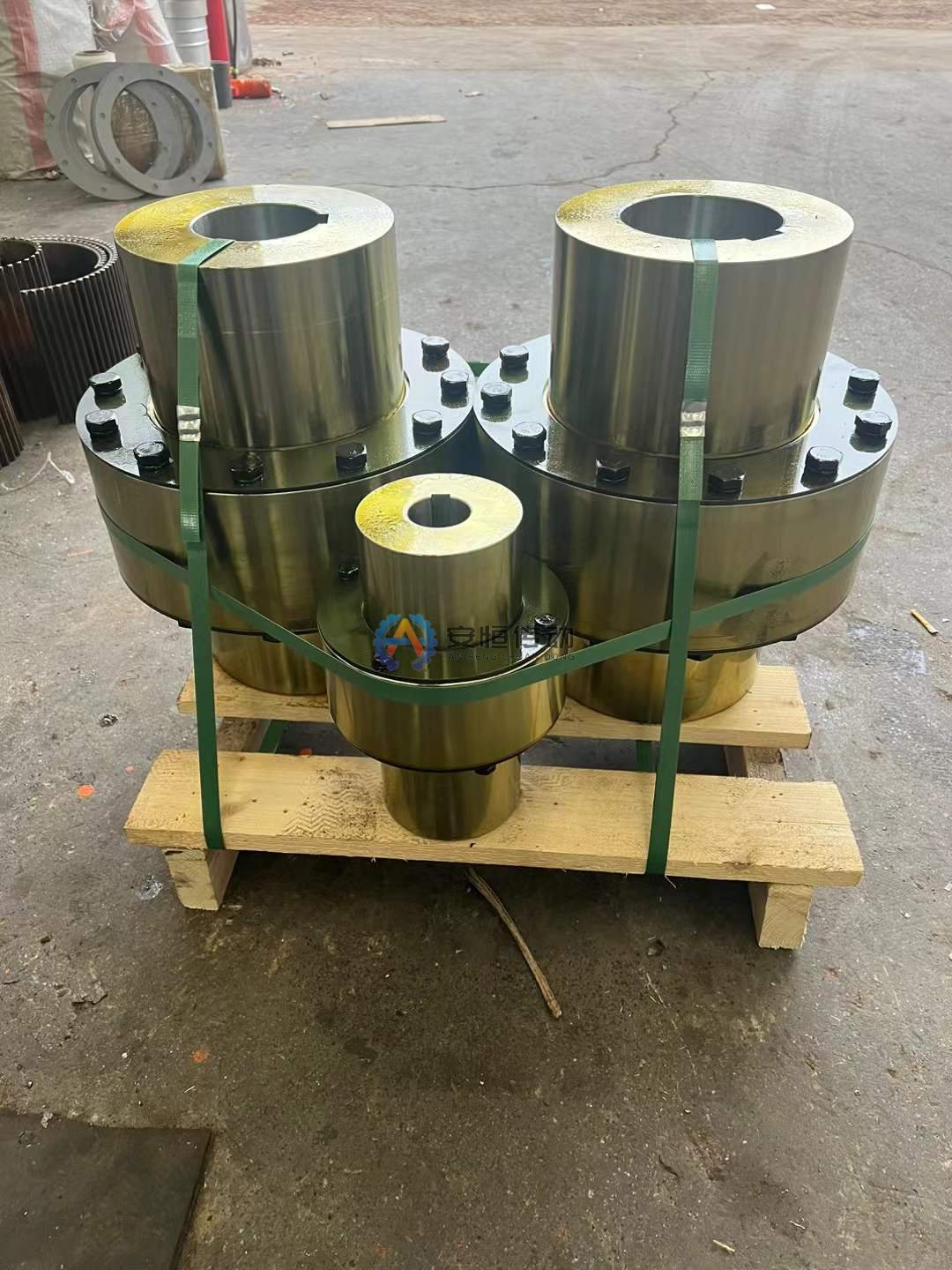
What gantry travel duty does to pins, outer rings and retaining rings
An Elastic Pin Gear Coupling carries torque through nylon pins sitting in matching grooves in the two hubs and the outer ring, with retaining rings at each end holding the pins in. On a travel drive, every start, braking stop and change of direction loads the pins first on one flank and then the other, so pins wear thin and the grooves slowly lose their round shape.
Starting against wind or a stiff rail puts a high breakaway torque through the drive, and braking adds peak torque in the opposite direction. Gantry skew adds to it: when one leg lags and the control corrects it, the drives on one side carry more than their share for a moment, so couplings on one crane often wear at different rates.
Salt air rusts the grooves of hubs and outer rings and corrodes retaining ring bolts until they loosen and pins start to walk out. Nylon also takes up moisture and changes slightly in size, one more reason to judge pins by measurement rather than appearance.
Measuring and recording wear
Give every coupling an identity, such as crane number, leg and drive position. Then measure the same things each time, so readings can be compared across the fleet and over time:
- Rotational free play: hold the gearbox side, turn the motor side by hand both ways and measure the movement at the outer ring with a dial indicator or scribed marks.
- Pin diameter in the loaded zone against an unworn part of the same pin, plus flats, cracks, melting or swelling, on several pins per coupling.
- Groove wear in hubs and outer ring: fit a new pin, check the clearance with a feeler gauge and look for steps or oval grooves.
- Retaining rings and bolts: loose, missing or corroded bolts, bent rings, pins standing proud of the face.
- Corrosion on hubs, outer ring and keyways, and whether each hub is still tight on its shaft.
Photograph each coupling with a scale in the picture and keep one table per crane, with a new coupling of the same size measured at installation as the reference. Knocking at starts or braking is a good reason to look closer, but read it together with these measurements rather than on its own.
Pins only, or the whole coupling?
New pins alone make sense when the grooves are still round and smooth, a new pin sits snugly in them, the retaining rings are sound and both hubs are tight on their shafts. Then a pin change restores the coupling at low cost during a short stop.
Replace the coupling, or at least the hubs and outer ring together, when grooves are stepped or oval and new pins fit loosely, when the outer ring is cracked, when a hub has worked loose or its keyway is damaged, or when corrosion has eaten into the grooves. Repeated pin failures soon after a pin change point the same way.
Mixing old and new parts causes most of the trouble. New pins in worn grooves touch along a line instead of a surface and wear fast, a few new pins among old ones take most of the load, a new outer ring on worn hubs does not share load evenly, and pins from different sources may differ in material and stiffness, so change pins as a full set from one source.
Planning spares for many wheel drives
A crane has several travel drives and a terminal has several cranes, so sort the measured couplings into condition classes and plan around the maintenance windows. One workable grading:
| Class | Condition | Action |
|---|---|---|
| A | Grooves round, pins within your limit | Measure again at the next planned stop |
| B | Pins worn, grooves still good | Full pin set at the next stop, coupling on the watch list |
| C | Grooves stepped or oval, cracks or a loose hub | Complete coupling at the next stop |
Change couplings a leg or corner at a time so that drives working together are in the same condition, because a drive with more play engages later at starts and leaves the others to take the first torque. Stagger the cranes so that one at a time is out of service, and keep full pin sets for the fleet plus a few complete couplings, bored to your shafts, for class C drives.
Typical scenario: a terminal measures the gantry travel couplings across its rail-mounted gantry cranes and finds most in class A or B and a few in class C. The class C couplings are ordered first for the next planned stops, pin sets for class B follow in a second batch, and class A drives are measured again at the next inspection.
What to send with the inquiry
Couplings on cranes from different delivery batches are not always the same size or bore, so give us the data drive by drive. A complete inquiry contains:
- Photos of hubs, outer ring, pins and retaining rings, including any markings.
- Measured dimensions: outer ring diameter and width, number, diameter and length of the pins, bores and keyways on the motor and gearbox sides, hub lengths and the gap between shaft ends.
- Motor and gearbox nameplates, with power, speed and ratio.
- Quantities per condition class, the number of cranes, and the delivery batches and dates you need.
Lost drawings are not a problem: photos and measured dimensions are enough for us to make replacement couplings. For salt air, tell us which surface finish you want, as it can be agreed with the order.
FAQ
Can I use pins from another supplier in my existing couplings?
Only if diameter, length and material match and the pins sit snugly in the grooves. Even then, change the whole set at once rather than mixing new pins with old ones.
How do I set a replacement limit if the manual gives none?
Use the readings from a new coupling of the same size as the reference and watch each drive’s trend between inspections. Set a fleet limit based on how fast the play grows, and stay on the cautious side for drives that brake hard.
Which torque should the replacement be sized for?
Start from the motor rated torque and a service factor for frequent starts, reversing and braking, then check the peak torque from braking and the breakaway torque when starting against wind. If the original coupling wore normally, keeping the same LZ size is usually right; if it failed early, review the size instead of copying it.
Measure and grade the travel drive couplings at your next inspection round, then send us the table with photos and nameplates. We make the LZ Elastic Pin Gear Coupling from LZ1 to LZ23 with bores from 12 mm to 850 mm in C45 (≈ AISI 1045) or 42CrMo4 (≈ AISI 4140), with matching pin sets; standard sizes ship in as little as 10 days and copies made from an old part take from 20 days, non-standard hubs are confirmed after drawing review, and a material certificate (mill test certificate) and dimensional inspection report can be supplied. Send us your drawing or measured data, and we will confirm the size and batch quantities for each drive.
Need an engineering selection or replacement review?
Send power, speed, shaft diameters, keyway, installation dimensions, drawings or old-part photos. We will review the working condition before confirming the model and quotation.