
Technical Articles
Tyre Coupling Failure Causes on Slag Granulation Pumps: Crack Patterns, Steam, Alignment and Clamping
When the tyre element on a blast furnace slag granulation pump cracks again a short time after replacement, the rubber is usually reporting a problem rather than being one. The common tyre coupling failure causes on these pumps are heat and steam aging, installation errors such as a twisted tyre, a wrong shaft gap or uneven clamping, and a size or compound that does not match the duty. Reading the crack pattern first tells you which of these to check.
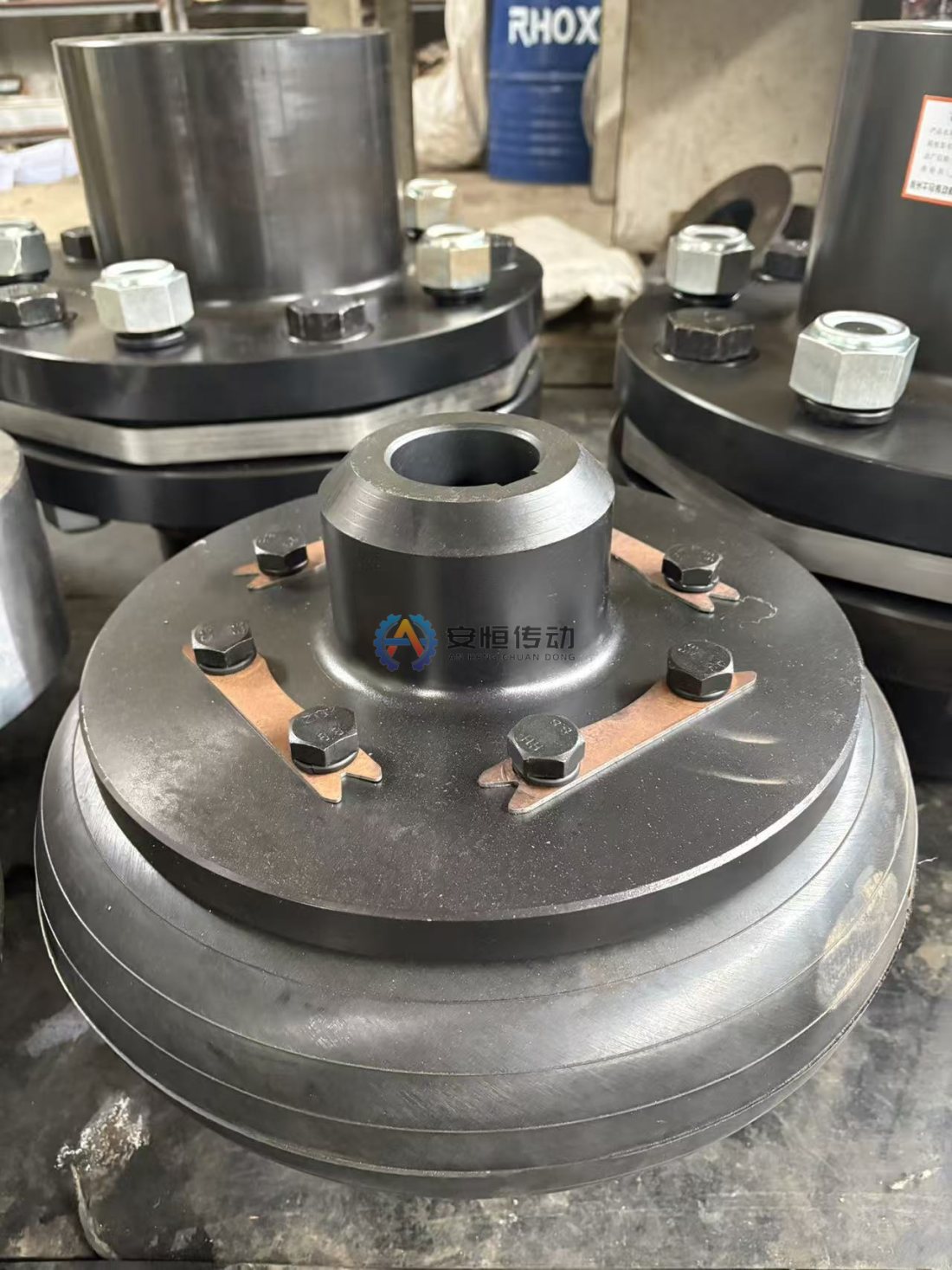
Why slag granulation pumps are hard on tyre couplings
A slag granulation pump handles hot slag water close to the slag channel, where steam rises constantly, radiant heat is high and fine slag particles settle on everything. Rubber ages faster as temperature rises, and steam and hot water speed up hardening and surface cracking of the tyre.
The duty also varies: flow swings with each cast, pumps start and stop frequently, and slag build-up can make a start harder, so the tyre sees repeated peak torque above its running torque. A Tyre Coupling is chosen here because it absorbs shock and accepts large misalignment, but those strengths depend on the rubber staying elastic.
Read the crack pattern first
Before fitting a new tyre, keep the cracked one and note where the cracks run, whether the rubber is hard or soft, and whether the clamping area shows marks. The pattern usually points to one main cause:
| Crack pattern | Points mainly to |
|---|---|
| Circumferential cracks around the crown or near the bead | Flex fatigue from misalignment or a wrong shaft gap, often sped up by heat |
| Radial tears from bead toward crown | Peak torque at start or from blockage, or a tyre twisted during assembly |
| Cracks or cuts at the bead (clamping lip) | Uneven or excessive clamping, wrong tightening sequence, or a bead that slipped |
| Fine surface crazing with hard, brittle rubber | Heat, steam or ozone aging rather than mechanical overload |
| Swollen, soft or sticky rubber | Oil contamination |
Combine what the tyre shows with temperature readings taken at the coupling guard and the operating log of starts and blockages; a high reading supports heat aging but does not prove it on its own. Typical scenario: the duty pump nearest the slag channel cracks its tyre far more often than the identical standby pump further away, which points to the local environment rather than to the tyre batch.
Installation checks: twist, shaft gap and clamping bolts
A tyre fitted with a twist carries a permanent torsional preload, so it starts its life partly loaded and tears radially sooner. Fit the tyre so that it sits naturally between the hubs, and hold the hubs still while the clamping bolts are tightened so the tyre is not wound up.
The distance between shaft ends must match the coupling specification. Too short a gap compresses the tyre and too long a gap stretches it, and either way the rubber flexes harder on every revolution and cracks circumferentially; check the gap after any pump or motor work, including impeller and bearing changes.
Tighten the clamping bolts evenly, in the sequence and to the torque in the coupling manual, and recheck after the first run if the manual calls for it. Uneven or excessive torque pinches and cuts the bead, while loose bolts let the bead slip, heat up and fret; both end in bead cracking.
Tyre couplings accept large misalignment, but running near the limit increases flexing and internal heat in the rubber, which matters more when the surroundings are already hot. Align as carefully as you would for a stiffer coupling.
Heat, steam and oil around the slag channel
Look at where the coupling sits relative to the slag channel, steam vents and drains. A coupling in the path of rising steam or radiant heat ages fast regardless of how well it is installed, and water spray carries fine slag onto the tyre and clamping rings.
A guard has to keep steam, water and slag off the tyre without trapping heat; a fully closed guard in a hot, wet area can turn into a steam box. Add a heat shield on the side facing the slag channel, keep ventilation open on the other sides, and redirect steam vents or drains that point at the coupling.
Oil from leaking pump or motor bearings swells and softens many rubber compounds. Fix the leak and clean the area around the tyre. If oil cannot be kept away entirely, ask for an oil-resistant tyre compound.
When cracking repeats at the same pump: size and tyre compound
If the crack pattern points to fatigue or tearing and installation and environment have been corrected, recheck the coupling size against the real duty. Use the motor rated torque and the peak torque from starts and slag blockages, with a service factor that allows for the high temperature, rather than motor power alone.
Ask for the tyre compound and its temperature and oil resistance in writing, and compare them with the conditions at the pump. Our tyre couplings come in UL (UL1–UL18), LA (LA1–LA15) and LB (LB1–LB14) series, and before we pick a size we check torque, speed, shaft diameter, keyway, service factor, misalignment and the working environment. Related reading: Slurry Pump Impeller Adjustment: How to Recheck Coupling Gap and Alignment Afterwards and Coupling Misalignment Symptoms and Prevention Methods.
If the temperature at the coupling stays beyond what any rubber compound can tolerate even after shielding, a tyre coupling is the wrong choice for that position, and an all-metal flexible coupling should be considered instead. Where it can work, a correctly sized tyre coupling with the right compound is easy to service, because split-tyre designs can be changed without moving pump or motor.
FAQ
How long should a tyre last on a slag granulation pump?
There is no single figure; life depends on temperature, steam exposure, alignment and duty. The useful measure is your own record: if one pump’s tyre fails much sooner than an identical pump elsewhere in the plant, look for the difference between the two positions.
Can we use a tyre from a different supplier on the old hubs?
Only if bead dimensions, clamping ring fit and compound are confirmed to match the hubs and the duty. A tyre that seats poorly in the clamping rings cracks at the bead regardless of quality.
Should we tighten the clamping bolts harder to stop bead slip?
No. Tighten to the specified torque in the specified sequence; extra torque cuts the bead and creates the cracking you are trying to avoid. If the bead still slips, check the clamping rings and bead seat for wear or damage.
Before ordering another tyre, read the crack pattern, check twist, shaft gap and clamping, and look hard at heat, steam and oil around the pump. We make replacement couplings from drawings or from photos and measured dimensions; standard sizes ship in as little as 10 days and copies made from an old part take from 20 days, and a material certificate (mill test certificate) and dimensional inspection report can be supplied with the shipment. Send us your drawing with photos of the cracked tyre and the pump data, and we will check the size and compound for your conditions.
Need an engineering selection or replacement review?
Send power, speed, shaft diameters, keyway, installation dimensions, drawings or old-part photos. We will review the working condition before confirming the model and quotation.