
Technical Articles
Fan Disc Coupling Replacement on a BOF Primary Dedusting Fan: What to Verify Before Ordering
On a BOF primary dedusting fan, the original imported disc coupling is often the part with the longest lead time and the highest spare price, which is why many steel plants look for a replacement. A fan disc coupling replacement can fit first time even with only the nameplate and an outline drawing, provided the disc pack, spacer, flange interfaces and bores are checked before ordering. This guide lists what to verify, how to handle balancing and documents, and how to install and monitor the new coupling.
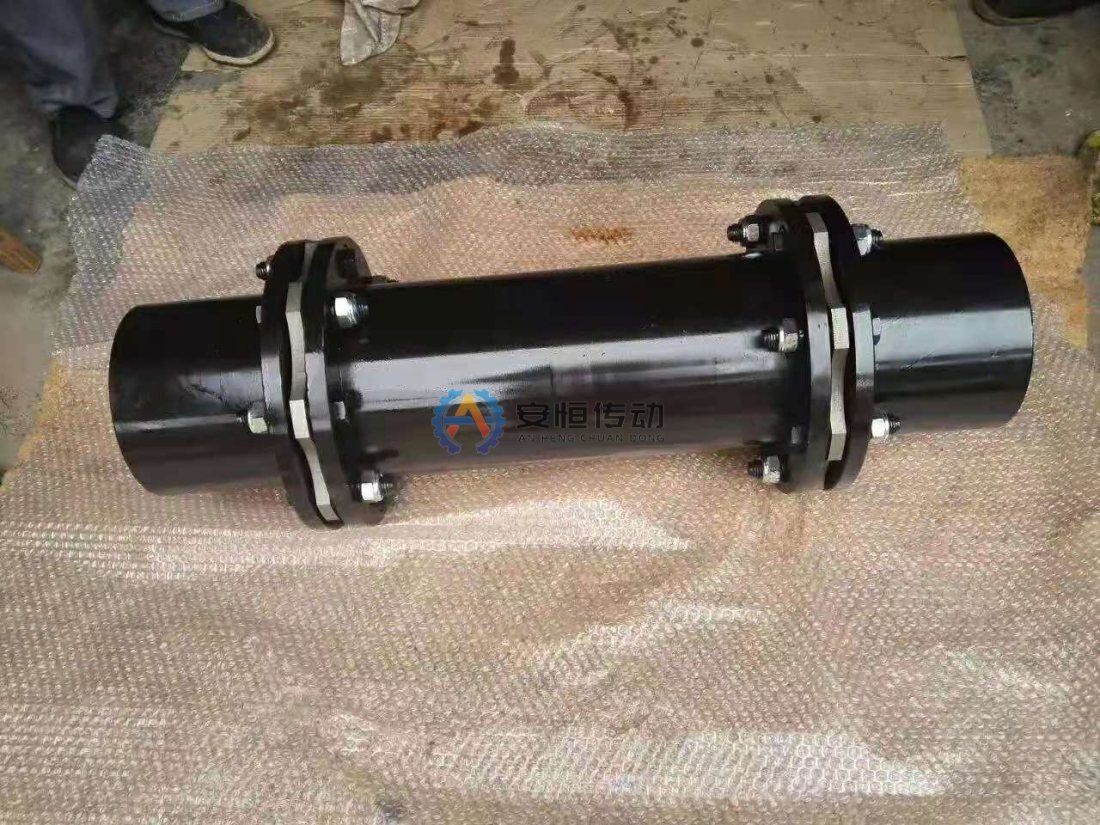
Why the primary dedusting fan is hard on its coupling
The fan runs at variable speed, ramping up for oxygen blowing and down between heats, so the coupling sees frequent speed changes and, during acceleration, peak torque well above running torque. The gas is humid and dusty, and build-up on the impeller changes rotor balance over time, which makes the drive sensitive to any extra unbalance from the coupling.
Shutdown windows are short and tied to the converter schedule, so a coupling that does not fit or runs rough cannot simply be reworked on site. That is why a Diaphragm Coupling with a spacer is the usual choice here: it needs no lubrication, accepts misalignment through flexing disc packs, and the spacer can be removed without moving the motor or fan.
What to collect when you only have a nameplate and an outline drawing
An outline drawing gives envelope dimensions but rarely the interface details that decide whether a replacement fits. Collect the following, measuring on site where the drawing is silent:
- Nameplate data: coupling model or size, maximum speed, torque rating and serial number.
- Distance between shaft ends, measured on site, and overall coupling length.
- Spacer length from flange face to flange face, and hub lengths.
- Flange outside diameter, bolt circle, number and size of bolt holes, and the pilot diameter, depth and which side is male or female.
- Bore connection on both shafts: keyed, interference fit or tapered, with shaft diameter or taper, keyway and any oil injection holes.
- Fan data: motor rated power, speed range, drive type and the vibration limits the plant works to.
Photograph a spare disc pack if one is in store, or the installed pack through the guard openings, from the side and face-on next to a scale. Typical scenario: a fan has only a nameplate and an outline drawing; the shaft end gap is measured on site, flange pilots and spacer length are confirmed during a short stop, and the disc pack type is identified from photos of the spare in the store.
Key interchange items: disc pack, bore connection, length and spacer
The disc pack decides torque capacity, misalignment capacity and axial stiffness. Match its type, number of bolts, disc profile and lamination stack to the original, or confirm that a different pack gives at least the same ratings without changing axial behaviour; a stiffer pack can push motor and fan bearings axially when the shafts grow with heat.
The bore connection has to match the shaft exactly. Keyed hubs need the keyway size and fit; interference-fit hubs need the measured shaft diameter and the required interference; tapered bores need the taper, gauge length and any oil injection grooves, ideally taken from the shaft drawing or a measured taper rather than from the old, worn hub. See our pump and fan diaphragm coupling selection guide for how speed, alignment and spacer requirements tie together.
Overall length, spacer length and distance between shaft ends must match the installation, or the motor has to move, which nobody wants on a fan with a short stop. Keep the drop-out spacer feature so that seals and bearings can still be reached without disturbing alignment.
Balancing and inspection documents
A fan coupling must be balanced to the grade on the original drawing or to a grade agreed for the fan’s speed range. Components can be balanced individually, which keeps parts interchangeable, or the coupling can be balanced as an assembly with match marks, which usually gives a better result but means the parts must stay together; agree which, and agree the convention for keyed hubs, before manufacture.
Agree the inspection documents with the order. We can supply a dynamic balancing report, dimensional inspection report, material certificate (mill test certificate), heat treatment report and ultrasonic testing (UT) report for hubs and spacer. Typical hub and spacer materials are C45 (≈ AISI 1045) and 42CrMo4 (≈ AISI 4140), or the grade your specification calls for.
Doing the replacement: full set or parts, alignment and first run
Replacing only the disc packs or the spacer keeps the original hubs on the shafts, which saves removing interference-fit or tapered hubs, but it depends on matching bolt circle, pilots, bolt size and pack thickness exactly. A complete set removes all interface uncertainty and resets balance and condition, at the cost of hub removal; if the hubs show fretting, worn pilots or damaged bolt holes, the complete set is the better choice.
At installation, set the distance between shaft ends so the disc packs are neither stretched nor compressed axially, align with the expected thermal growth of motor and fan in mind, and tighten the fitted bolts to the specified torque in the specified sequence. Check alignment again after the first run, once the bearings reach working temperature.
Record vibration at several speeds across the operating range before the change, and repeat the readings after start-up. Compare them combined with the alignment and balancing records; a change in vibration is a clue, and impeller build-up can cause it as easily as the coupling. For speed limits and critical-speed checks, see our article on coupling speed rating and critical-speed screening.
FAQ
Can a non-OEM disc coupling replace the original imported one?
Yes, if disc pack ratings, interfaces, length and balancing are matched and documented. The risk lies in unverified dimensions, not in where the coupling is made, which is why data collection and drawing sign-off matter more than the brand.
Should we copy the original exactly or use a standard series?
If shaft sizes, length and speed fit a standard series, such as our JMII (JMII1–JMII30) or JMIIJ (JMIIJ1–JMIIJ29) ranges, a standard size with custom bores and spacer length is easier to re-order; speed and torque limits depend on the size. If the flange pattern, pilots or bore connection are unusual, a Custom Replacement Coupling built to the verified interfaces is the safer route.
Can we mix new disc packs with the original hubs and spacer?
Only if bolt circle, pilots, bolt size and pack thickness are confirmed to match, and the balance condition is rechecked. Mixed assemblies are where most fit and vibration surprises come from, so treat them with extra care.
Collect nameplate data, the outline drawing, the measured shaft end gap and photos of the disc pack before the next fan stop, and agree interfaces, balancing and documents before manufacture. Standard sizes ship in as little as 10 days and copies made from an old part take from 20 days and non-standard designs are confirmed after drawing review; urgent orders can be given priority, since turning, machining and induction hardening are done in-house, with the fastest lead time confirmed per model and quantity. Send us your drawing with the nameplate photo and fan data, and we will review your fan disc coupling replacement against the verified interfaces.
Need an engineering selection or replacement review?
Send power, speed, shaft diameters, keyway, installation dimensions, drawings or old-part photos. We will review the working condition before confirming the model and quotation.