
Technical Articles
Flexible Coupling Types for Industrial Drives: A Practical Comparison
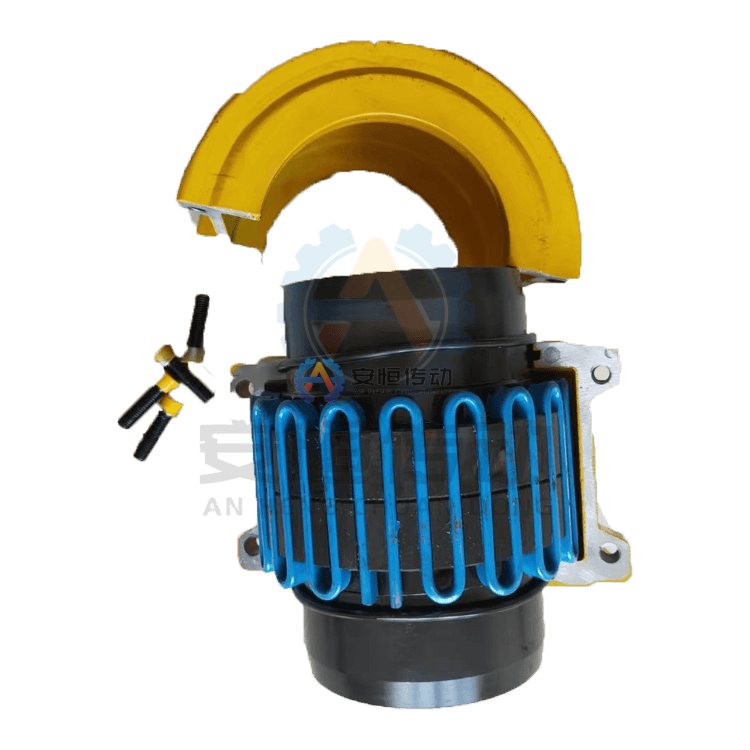
Flexible coupling is a family, not one construction. Elastomeric, pin-bush, grid, diaphragm, tyre, jaw, and gear couplings manage torque and shaft movement in different ways. A useful comparison starts with the machine's torque spectrum, speed, misalignment, temperature, maintenance access, and failure consequence.
Match flexible coupling type to the industrial drive duty
A pump train may prioritise low maintenance and electrical isolation. A crusher or conveyor may need damping for shock load. A high-speed fan may need low unbalance and a defined torsional stiffness. Treating every flexible coupling as a soft substitute creates avoidable resonance, heat, or wear problems.
Open engineering data for Flexible Coupling Types for Industrial Drives
Classify the drive by torque, speed, axial movement, angular and radial misalignment, torsional damping, electrical isolation, ambient temperature, and access for replacement. Then screen the available families. The product page should confirm construction; the article should explain the decision path.
For flexible coupling families, start with the Pin Bush Coupling page. Use the custom replacement coupling page when the installed interface is no longer catalogue standard.
| Engineering input | Confirmation required |
|---|---|
| Load cycle | Continuous, start-up, reversing and blocked-load torque |
| Speed and movement | Normal speed, axial displacement and angular misalignment |
| Interface | Bore, keyway, hub length, DBSE and guard envelope |
| Environment | Temperature, dust, moisture, lubricant or elastomer exposure |
Compare movement and transient load: Flexible Coupling Types for Industrial Drives
Use continuous torque for steady operation and peak torque for acceleration, blockage, or reversal. Check the coupling's allowable speed, element temperature, torsional stiffness, and bore capacity. If the drive can pass through a torsional resonance, request the manufacturer's dynamic data rather than choosing by catalogue torque alone.
For flexible coupling families, the coupling misalignment prevention guide is useful when the failure history suggests that the rating basis or transient load has been misunderstood.
Check maintenance and failure consequence: Flexible Coupling Types for Industrial Drives
Follow the family-specific installation drawing. Elastomer elements require correct compression and temperature limits; gear couplings require lubrication and sealing; diaphragm couplings require clean flange faces and accurate axial setting. The guard must allow inspection without exposing rotating parts.
Write down each construction's limit: Flexible Coupling Types for Industrial Drives
Look for heat, cracked elastomer, fretting at the bore, tooth wear, loosened fasteners, or diaphragm fatigue. A coupling that fails only during starts may be reacting to peak torque, while a coupling that fails at steady speed may be reacting to resonance or misalignment.
On a flexible coupling families installation, do not replace the worn part before checking the shaft, keyway, bearings, guard and machine alignment. Read the damage as evidence, then check the surrounding machine before choosing the part.
Record the comparison before approval: Flexible Coupling Types for Industrial Drives
Describe the driven machine, start and stop pattern, motor power, speed, torque, shaft data, ambient conditions, misalignment readings, replacement clearance, and preferred maintenance interval. A supplier can then compare families without treating the cheapest or smallest model as the default.
Two practical questions: Flexible Coupling Types for Industrial Drives
What should the comparison record show?
Write the duty, evidence, limits and reason for the selected construction, with open data clearly marked.
Is a higher torque rating enough?
No. Compare movement, transient load, speed, fit, backlash, lubrication and maintenance consequence at the actual shaft position.
Send a reviewable engineering request: Flexible Coupling Types for Industrial Drives
For the “Flexible Coupling Types for Industrial Drives” review, send the equipment name, operating duty, available torque and speed data, shaft drawing or clear photos, quantity and delivery need through technical RFQ form. Keep measured values separate from estimates so the drawing review can see what is still open.
Need an engineering selection or replacement review?
Send power, speed, shaft diameters, keyway, installation dimensions, drawings or old-part photos. We will review the working condition before confirming the model and quotation.