
Technical Articles
Coupling Guard Inspection Checklist for Heavy-Duty Equipment
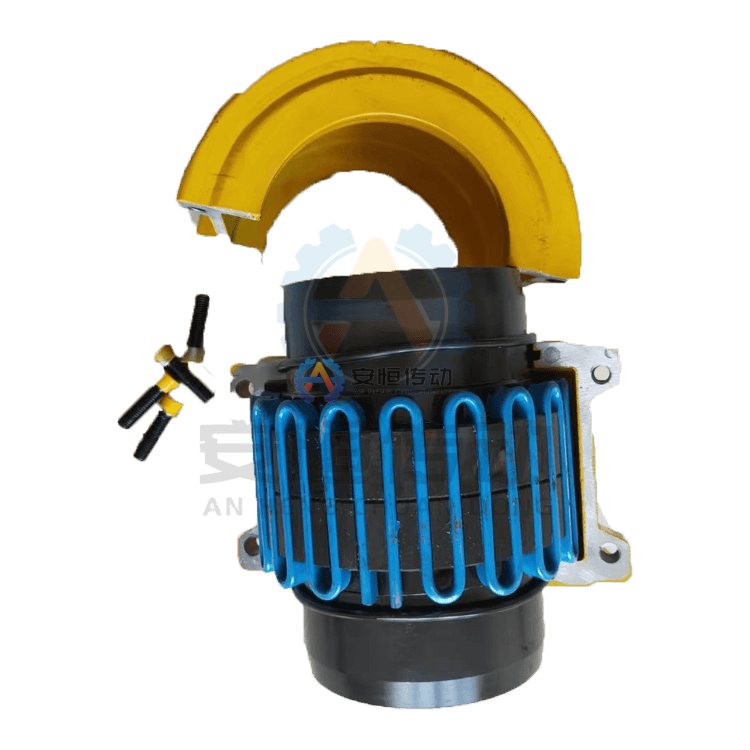
A coupling guard inspection must verify containment, clearance, access control, and condition of the mounting points. The guard is a safety component, not merely a cover that can be trimmed whenever a coupling is changed.
Make guard clearance part of the coupling inspection
Heavy-duty drives collect dust, scale, grease, and loose fasteners around the guard. A replacement coupling may have a larger flange, a different axial position, or a larger bolt head. Any of these can reduce clearance or create a contact point.
Open engineering data for Coupling Guard Inspection Checklist for Heavy-Duty Equipment
Confirm guard material, openings, support stiffness, access panels, coupling envelope, maximum speed, hot surfaces, drain paths, and lockout requirements. Check that inspection ports cannot expose rotating parts and that the guard does not carry pipe or cable loads.
For coupling guard inspection, start with the Gear Coupling page. Use the custom replacement coupling page when the installed interface is no longer catalogue standard.
| Engineering input | Confirmation required |
|---|---|
| Load cycle | Continuous, start-up, reversing and blocked-load torque |
| Speed and movement | Normal speed, axial displacement and angular misalignment |
| Interface | Bore, keyway, hub length, DBSE and guard envelope |
| Environment | Temperature, dust, moisture, lubricant or elastomer exposure |
Do not let tightening hide an alignment error: Coupling Guard Inspection Checklist for Heavy-Duty Equipment
Measure static and dynamic clearance through the expected axial and angular movement. Consider thermal growth, flexible element expansion, and a loose part scenario. Do not use an assumed clearance value when the project safety standard requires a documented calculation.
For coupling guard inspection, the old equipment coupling replacement guide is useful when the failure history suggests that the rating basis or transient load has been misunderstood.
Release only what the record supports: Coupling Guard Inspection Checklist for Heavy-Duty Equipment
Install the guard after the coupling has been aligned and lubricated. Rotate by hand, perform a low-speed bump test, and inspect for rub marks before full speed. Keep fasteners captive where possible and record the guard condition in the maintenance system.
Trend temperature, vibration and wear: Coupling Guard Inspection Checklist for Heavy-Duty Equipment
Shiny rub marks, cracked welds, missing bolts, distorted mesh, grease leakage, and blocked drains are failure clues. A guard that vibrates can damage the coupling or loosen its own supports. Stop and correct the guard before returning the drive to service.
On a coupling guard inspection installation, do not replace the worn part before checking the shaft, keyway, bearings, guard and machine alignment. Read the damage as evidence, then check the surrounding machine before choosing the part.
Hand over the next inspection: Coupling Guard Inspection Checklist for Heavy-Duty Equipment
Send guard drawings, coupling dimensions, speed, movement, photos, access requirements, and quantity. State whether a standard guard can be adapted or a new enclosure is required. The RFQ should include the safety review responsibility.
Two practical questions: Coupling Guard Inspection Checklist for Heavy-Duty Equipment
Can a coupling compensate for poor alignment?
Only within the approved movement limits. It cannot replace shaft checks, machine alignment or correction of soft foot and foundation problems.
What belongs in the first loaded-run record?
Record speed, load state, temperature, vibration, noise, fastener condition and the state of grease or wear parts.
Send a reviewable engineering request: Coupling Guard Inspection Checklist for Heavy-Duty Equipment
For the “Coupling Guard Inspection Checklist for Heavy-Duty Equipment” review, send the equipment name, operating duty, available torque and speed data, shaft drawing or clear photos, quantity and delivery need through technical RFQ form. Keep measured values separate from estimates so the drawing review can see what is still open.
Need an engineering selection or replacement review?
Send power, speed, shaft diameters, keyway, installation dimensions, drawings or old-part photos. We will review the working condition before confirming the model and quotation.