
Technical Articles
Jaw Coupling Spider Failure on Rolling Mill Hydraulic Power Units: Causes and Checks
On a rolling mill hydraulic power unit, a jaw coupling spider that melts, crumbles or cracks a short time after replacement is telling you something about the drive, not just about the spider. Jaw coupling spider failure on these units usually traces back to bell housing alignment, pump loading cycles and pressure spikes, the wrong element material or hardness, or heat in the pump room. Read the failed spider first, then work through the checks below before fitting another one.
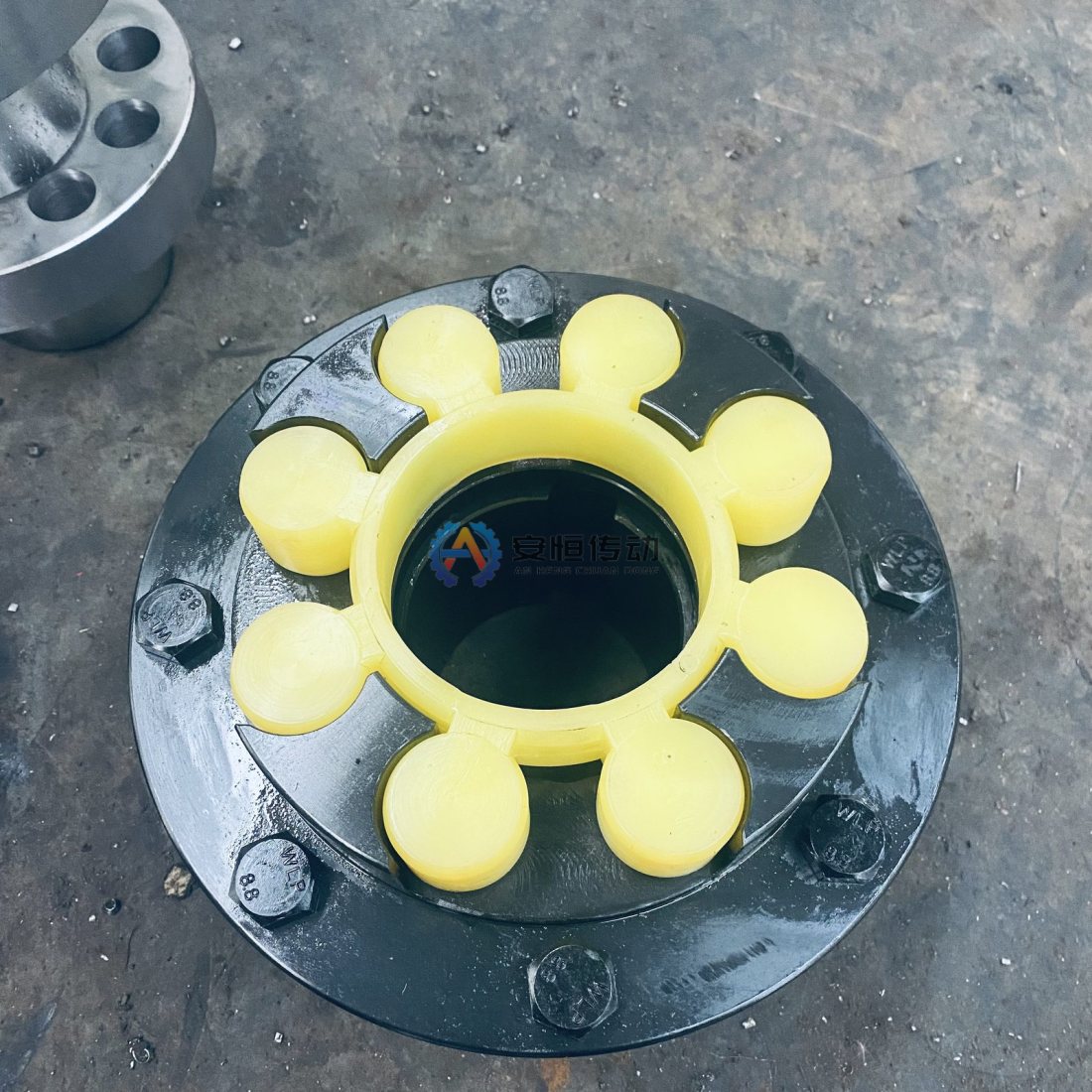
Why hydraulic power units are hard on jaw coupling spiders
Hydraulic stations for gap control, roll changing and cylinder supply run their pumps through constant cycles of loading and unloading, and fast valve switching sends pressure spikes back through the pump shaft as peak torque well above running torque. The coupling sits inside a bell housing, out of sight, where heat from the motor, the pump and hot oil builds up and oil mist can reach the element.
A Jaw Coupling suits this drive because the elastomer spider damps pump pulsation and shocks, and the jaws keep driving if the spider fails. That fail-safe behaviour is also why problems go unnoticed: once the spider is gone, metal jaws strike metal jaws and the damage spreads to the pump and motor bearings.
Read the failed spider first
Keep the failed spider, note which side of the petals is damaged and whether the hubs are discoloured, and photograph both. The failure form usually points to one main cause:
| Spider condition | Points mainly to |
|---|---|
| Melted, soft or sticky petals | Overheating from misalignment, heat in the bell housing, or an element used outside its temperature range |
| Powdered or crumbled element | Rubbing from misalignment or too small a hub gap, or an element attacked by oil |
| Petals squashed on one side only | Peak torque above what the element carries, or a spider that is too soft |
| Tears at the petal roots or centre ring | Angular misalignment, axial squeeze from too small a gap, or shock torque |
| Hard, cracked element | Aging from heat or oil, long service, or a spider that is too hard |
Combine what the spider shows with temperature readings at the bell housing and the pump’s load cycle; a hot reading supports overheating but does not prove it on its own. Typical scenario: after a motor is replaced with one of a different make and an adapter flange is added, spiders start failing far sooner than before, which points to the new spigot fit rather than to the spider batch.
Installation checks inside the bell housing
The bell housing is supposed to centre motor and pump, but only if its spigots, the motor flange and the pump flange are concentric and fit without play. A worn or loose spigot, a distorted housing or an adapter flange added after a motor change can leave a parallel offset that nobody measures because the coupling is hidden. Where you can, check hub runout with a dial indicator through the inspection window, and check the spigot fits whenever the motor or pump comes off.
The gap between the hub faces must match the coupling specification. Too small a gap squeezes the spider axially, heats it and tears it at the roots, and it can push on the pump bearings; too large a gap shortens jaw engagement and loads the petal edges.
Check set screws and keys: a loose set screw lets a hub slide and changes the gap, and a loose key lets the hub rock and fret on the shaft. Look at the jaws too; if they have worn a step where the petals sit, a new spider will be cut on that step and fail quickly.
Spider material, hardness and coupling size
Spider materials differ in how they handle heat, oil and humidity; polyurethane and rubber elements, for example, do not behave the same in hot hydraulic oil mist. Our jaw coupling is rated for a working temperature of −30 °C to +80 °C, so a bell housing that runs near the top of that range leaves little margin, and ventilation or a different element material should be considered.
Hardness matters as much as material. A spider that is too soft deforms under peak torque and heats up, while one that is too hard passes shocks into the pump and cracks; never mix hardness grades or spiders from different sources in one coupling, because jaw profile and petal fit may not match.
If the spider fails even when alignment, gap and material are right, recheck the size against the motor rated torque, the service factor for this duty and the peak torque from pressure spikes. Our LM series runs from LM50 to LM400 to GB/T 5272-2017, with nominal torque from 28 N·m to 14,000 N·m and bores from 10 mm to 160 mm across the range; the ratings depend on the size.
When jaws touch: emergency action and full replacement
Knocking at start and during load changes, together with rising vibration at the pump, are the usual clues that the jaws are touching metal to metal. Stop the unit as soon as the process allows; running on with jaws in contact sends shock loads into the pump shaft, the motor bearings and the hubs themselves.
Replace only the spider when the jaws are clean and square and the hubs are tight on their shafts with no heat discoloration. Replace the whole coupling when the jaws are stepped or chipped, a hub is cracked or discoloured by heat, or a bore or keyway has worn loose; on open, foot-mounted pump sets, the LMS double-flange type lets the element be changed without moving the machines.
FAQ
How often should jaw coupling spiders be replaced on a hydraulic power unit?
There is no single interval; it depends on load cycles, temperature, alignment and element material. Inspect the spider at every planned stop where the bell housing is opened, record its condition, and set the interval from your own records rather than waiting for knocking.
Can we fit a harder spider to make it last longer?
Only if the harder grade is specified for that coupling and duty. A harder spider resists deformation but passes more shock into the pump and is more prone to cracking, so fix alignment, gap and heat first.
Is a jaw coupling still the right choice if spiders keep failing?
Usually yes, once the cause is fixed, because it damps pump pulsation and is easy to service. If the bell housing area stays hotter than the element’s working range even with ventilation, or peaks keep exceeding what a size that fits the available space can carry, a coupling without an elastomer element may suit that position better.
Before fitting another spider, read the failed one, check spigot fit, hub gap, set screws and jaws, and confirm that element material, hardness and size suit the pump’s duty and temperature. We supply complete jaw couplings and can make replacements from drawings or from photos and measured dimensions, with Y, J or Z (1:10 taper) bores to GB/T 3852 and keyways to your drawing; standard sizes ship in as little as 10 days and copies made from an old part take from 20 days. Send us your drawing with motor and pump data and photos of the failed spider, and we will check the coupling for your hydraulic unit.
Need an engineering selection or replacement review?
Send power, speed, shaft diameters, keyway, installation dimensions, drawings or old-part photos. We will review the working condition before confirming the model and quotation.