Technical Articles
Replacement Jaw Coupling Spiders and Hubs for Pickling and Galvanizing Line Pumps: What to Match
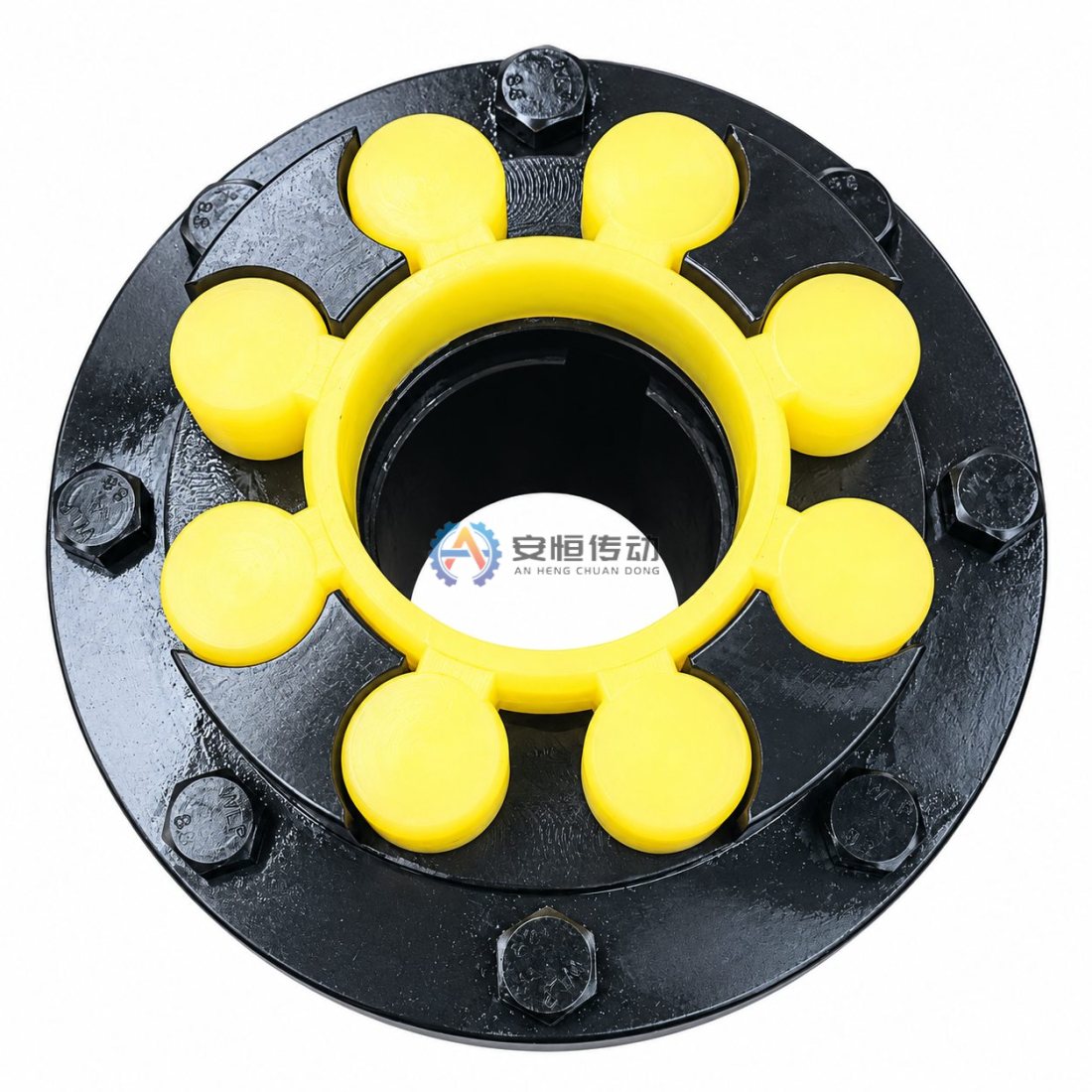
On pickling and galvanizing lines, many jaw couplings on acid circulation pumps, rinse pumps and fume extraction fans are original imported parts, and the original spares can take a long time to arrive. A replacement jaw coupling spider or a complete coupling from another source can fit first time, but only if jaw profile and number of jaws, spider size and hardness, bores and installation length are checked before ordering. Here is what to measure, what to keep the same, and when replacing the whole coupling is the better choice.
What pickling and galvanizing lines do to jaw couplings
Acid mist from the pickling tanks and fumes from the zinc pot area corrode steel hubs, seize set screws and pit bores and keyways, while rinse and wash-down water keeps everything damp. Spiders face chemicals, heat near furnaces and the zinc pot, and humidity, and an element that suits one pump may age quickly on the next one closer to the tanks.
The duty itself is usually moderate: pumps and fans running continuously with regular starts. That is why a Jaw Coupling is common here, and why most problems come from the environment and from mismatched replacement parts rather than from overload.
Why spiders and hubs from different sources do not simply interchange
Jaw couplings look alike from the outside, but jaw profile, number of jaws, jaw height and spider dimensions differ between designs and standards, and size names do not line up across makers. A spider that slips into another maker’s hubs may still have the wrong preload or contact area, so it carries less torque and wears out early; straight-jaw and curved-jaw designs are not interchangeable at all.
Before ordering anything, measure the old coupling with calipers and record the results with photos. These are the dimensions that decide interchangeability:
- Hub outside diameter, jaw outside and inside diameters, and the number of jaws.
- Jaw width and thickness at root and tip, and jaw height, which sets the engagement length.
- Spider outside and inside diameters, petal thickness, axial thickness and number of petals.
- Gap between the hubs with the spider fitted, and overall coupling length.
- Any hardness marking or colour on the spider, noting that colour codes are not consistent between makers.
Choosing spider material and hardness
Start from the original spider’s material and hardness, and change them only for a reason you can name. Check the element against what it actually meets at that pump: acid or alkaline splash, heat from the furnace or zinc pot area, hot water and humidity, or oil; polyurethane and rubber elements, for example, react differently to hot water and to chemicals.
Hardness changes torque capacity and torsional stiffness as well as life. A harder spider carries more torque but passes more shock and can change the drive’s torsional behaviour, while a softer one damps better but deforms sooner; keep the original hardness unless the duty has changed, and stay within the working temperature of −30 °C to +80 °C that our jaw couplings are rated for.
Bores, keyways, set screws and installation length
Measure each shaft rather than copying a corroded hub bore, and record keyway width and depth and the type of fit. Our hubs can be supplied with Y, J or Z (1:10 taper) bores to GB/T 3852 and keyways to your drawing, which also covers keyways made to other national standards; note where the set screws sit and whether they bear on the key or on the shaft.
The new coupling must fit the existing distance between shaft ends, with the hub gap the design needs, so that neither the pump nor the motor has to move. Where pumps are hard to shift, the LMS double-flange type lets the element be changed without moving the machines, and in severe acid areas hubs can be made in stainless steel 304 or 316 as a Custom Replacement Coupling.
Spider only, one hub, or the complete coupling
Which part to replace depends on what is worn and how well the original geometry is known. As a rule of thumb:
| Situation | Sensible choice |
|---|---|
| Hubs in good condition, original spider design confirmed | Spider only, matched to that hub design |
| One hub corroded or damaged, jaw geometry fully measured | One hub, made to match the other exactly |
| Jaw geometry uncertain, hubs worn or corroded, or switching supplier | Complete coupling from one source |
Typical scenario: a pickling line has a row of identical acid circulation pumps with original couplings, and spiders arrive only after a long wait. Standardizing on complete new couplings, fitted pump by pump at planned stops, removes the cross-fit question and leaves one spare spider type for the whole row.
FAQ
Can we fit your spider into our existing original hubs?
Only after jaw profile, number of jaws, jaw height and spider dimensions have been measured and compared. If they do not match closely, a spider that seems to fit will carry less torque and wear early, and a complete coupling is the safer choice.
What should we send with the inquiry?
Photos of the hubs, spider and any markings, the measured dimensions listed above, shaft diameters and keyways, pump and motor nameplates, the distance between shaft ends, the number of identical pumps, and a note on the chemicals and temperature at each position.
Is a stainless steel hub always necessary near acid tanks?
No. Many positions do well with standard steel hubs and a protective finish, but where acid mist or splash corrodes hubs fast enough to seize set screws or ruin fits, stainless hubs are worth the extra cost.
Measure the old coupling, decide whether you need a spider, a hub or a complete coupling, and send the data before the next planned stop. We make replacement couplings from drawings or from photos and measured dimensions; standard sizes ship in as little as 10 days and copies made from an old part take from 20 days, non-standard designs are confirmed after drawing review, and a material certificate (mill test certificate) and dimensional inspection report can be supplied with the shipment. Send us your drawing or photos and dimensions of the old coupling with the pump data, and we will confirm a replacement that fits.
Need an engineering selection or replacement review?
Send power, speed, shaft diameters, keyway, installation dimensions, drawings or old-part photos. We will review the working condition before confirming the model and quotation.