
Technical Articles
Changing Jaw Coupling Spiders Without Moving the Motor: LMS Double-Flange Retrofit on Caster Cooling Water Pumps
On a continuous caster, the mould cooling and secondary spray water pumps run in duty and standby pairs, and every hour a pump is out of service is an hour without a spare. With a basic jaw coupling, a spider change means unbolting the motor, sliding it back, refitting and realigning, which turns a simple element swap into a long job. The LMS double-flange type lets you do a jaw spider change without moving the motor, but only if it fits the existing pump set, so here is what to check before you order.
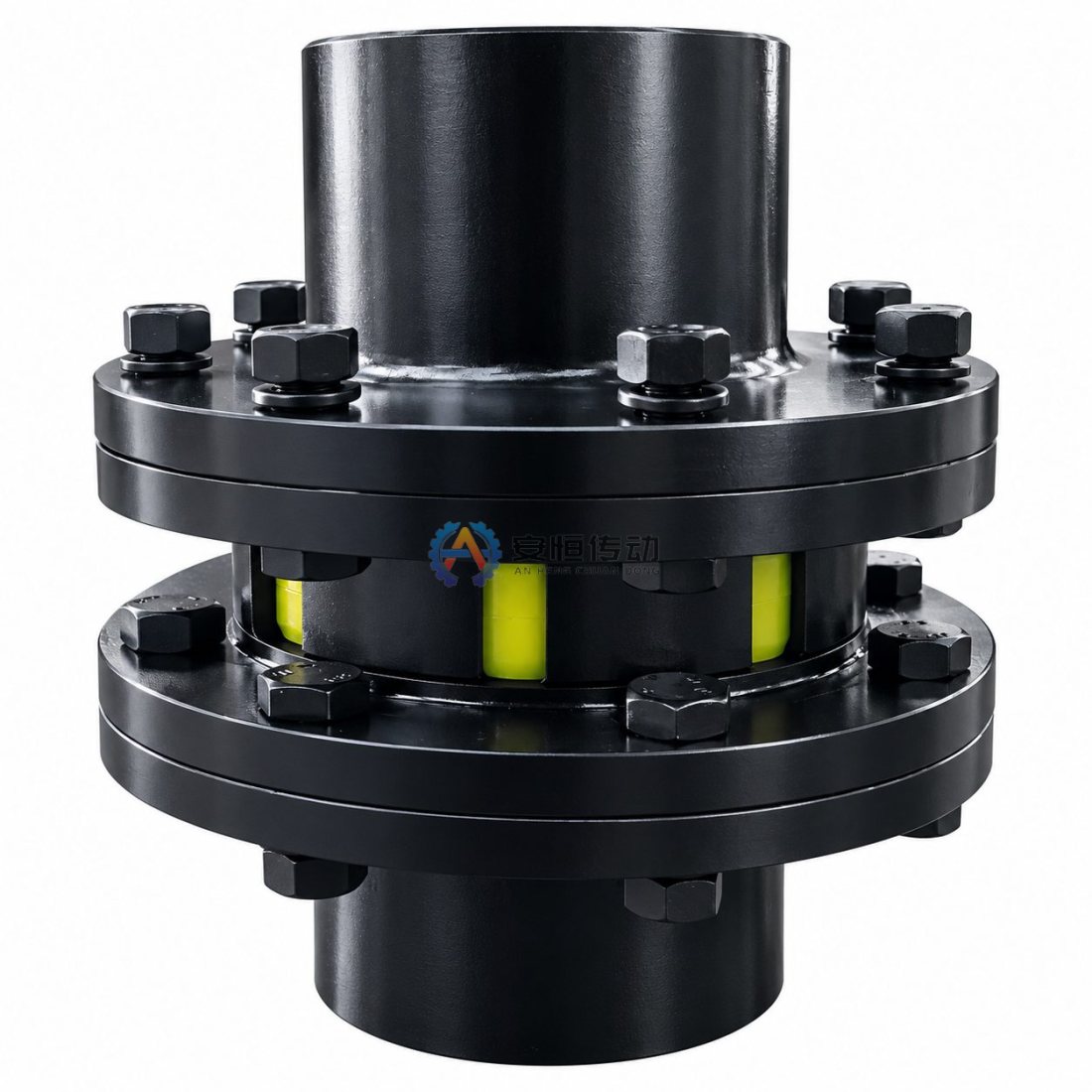
Why spider changes hurt on caster cooling water pumps
Cooling water pumps run continuously and switch between duty and standby, so while one pump is being worked on, the system has no reserve. The maintenance window is therefore short, and any job that needs the motor moved and realigned eats most of it.
The environment adds work. Splash and wash-down water, humidity and scale rust the hubs, seize set screws and age the spider, and on a Jaw Coupling of the basic type that means more frequent spider changes, each one with a motor move.
How the LMS double-flange type changes the spider in place
On the LMS type, the jaw parts are bolted to flanges on the hubs instead of being part of the hubs. The hubs stay on the pump and motor shafts; to change the spider you take out the flange bolts, move the jaw part clear and lift the spider out, so neither machine has to move.
A typical change follows the same few steps every time. Lock out both machines first:
- Remove the guard and mark the flange positions so parts go back the way they came out.
- Take out the flange bolts, move the jaw part clear and lift out the old spider.
- Clean flange faces and spigots, fit the new spider and refit the jaw part.
- Tighten the flange bolts crosswise to the specified value, then check the hub gap and do a quick alignment check before refitting the guard.
Because the hubs are not touched, alignment should not change, but checking it costs minutes and catches a hub that has moved on its shaft. Note the spider condition each time as well, since the change interval tells you how hard the pump set is being treated.
What to measure before ordering
An LMS coupling is not a drop-in for every basic jaw coupling, because its length and flange diameter for a given size can differ from what is fitted now. Measure the existing pump set and send these figures:
- Distance between shaft ends, measured at standstill with the motor in its normal position.
- Shaft diameters, keyways and bore form on the pump and motor sides, and the usable length of each shaft extension.
- Length and position of the existing hubs on their shafts.
- Inside diameter and length of the guard, or the free space around the coupling if the guard will be modified.
- Pump and motor nameplates, so the size can be checked against the motor rated torque, a service factor for continuous duty and the peak torque at direct-on-line starts.
Our LMS hubs can be bored Y, J or Z (1:10 taper) to GB/T 3852 with keyways to your drawing. If the existing shaft gap or shaft extensions do not suit a standard LMS size, a Custom Replacement Coupling with hub lengths made to the existing layout is usually cheaper than moving the pump or motor base.
When the LMS retrofit is not the right answer
Skip the retrofit, or rethink it, when the gap between shaft ends is too short for the LMS size you need, or when the pump is so small that it falls below the LMS range, which starts at LMS105. Check the speed as well: maximum speed differs by size across the LMS table, from 1250 r/min to 5260 r/min, so confirm it for the chosen size, especially on two-pole motors.
A new coupling also does not fix a poor foundation. If the base has soft feet, cracked grout or corroded anchor bolts, or the pump set has to be realigned anyway, do that work in the same outage, otherwise the new spiders will wear as fast as the old ones.
Planning the retrofit across duty and standby pumps
The retrofit itself still needs one motor move, so plan it for a caster maintenance stop rather than a short pump changeover. Start with the most critical service, usually the mould cooling pumps, and fit the same LMS size on duty and standby pumps of each service so one spider type covers both.
Keep spare spiders for every pump size on the shelf, and record each change so you can see whether intervals are getting shorter. Urgent orders can be given priority in our workshop, with the fastest delivery confirmed by size and quantity.
Typical scenario: a caster has duty and standby pumps for mould cooling and for secondary spray, all on basic jaw couplings, and each spider change takes most of a shift because of the motor move and realignment. Retrofitting the mould cooling pair at the annual stop and the spray pumps at the next planned stop turns later spider changes into a short job inside the normal pump changeover window.
FAQ
Does the LMS type need a different spider from the basic type?
Use the spider specified for the LMS size you order, and do not assume it is interchangeable with the spider of the coupling you have now. Keep the spares together with the coupling record so the right part reaches the right pump.
Can I keep my existing hubs and only add flanges?
Usually not, because the LMS hubs carry the flanges and are made as one part with them. Send photos and dimensions of the existing hubs and we will tell you whether anything can be reused.
How long does a spider change take after the retrofit?
That depends on access, guard design and your lockout procedure, so we will not quote a figure. What changes is that there is no motor move and no realignment from scratch, which are usually the longest steps.
Measure the pump sets during your next round, then send us the shaft gap, shaft and keyway details, hub and guard dimensions, nameplates and photos, together with the number of duty and standby pumps per service. We make the LMS double-flange version of our Jaw Coupling from LMS105 to LMS400 to GB/T 5272-2017; standard sizes ship in as little as 10 days and copies made from an old part take from 20 days, non-standard designs are confirmed after drawing review, and a material certificate (mill test certificate) and dimensional inspection report can be supplied with the shipment. Send us your drawing or measured data, and we will confirm which pumps can take an LMS coupling and which need a custom design.
Need an engineering selection or replacement review?
Send power, speed, shaft diameters, keyway, installation dimensions, drawings or old-part photos. We will review the working condition before confirming the model and quotation.