
Technical Articles
Jaw Coupling Spider Melting Next to the Brake Wheel on Steel Plant Crane Drives: Brake Drag, Runout or Duty?
When the spider of a brake-wheel jaw coupling keeps melting on the side next to the brake wheel and the wheel itself turns blue, the coupling is the victim, not the cause. On steel plant ladle cranes and stockyard cranes the travel drives inch, brake and reverse all day, and a brake that drags or a wheel that runs out of true pours heat straight into the hub that holds the spider. Here is how to track down jaw coupling brake wheel overheating in a sensible order before you fit another spider.
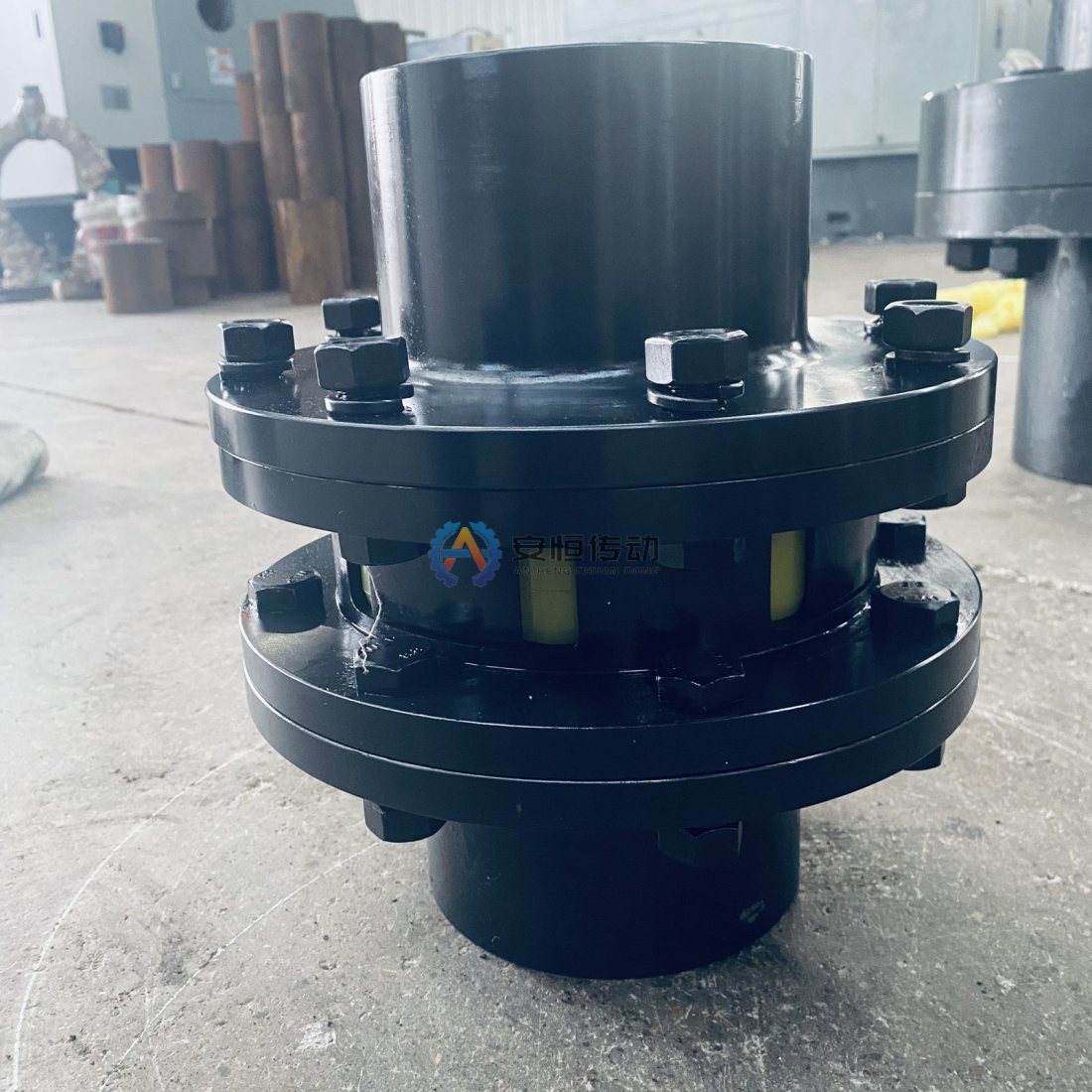
Where the heat comes from on a brake-wheel jaw coupling
On the LML type of our Jaw Coupling, the brake wheel belongs to one hub, so the rim, the web and the jaws that hold the spider are one heat path. Every stop turns travel motion into heat at the rim, and that heat flows through the hub into the spider petals on that side, which is why the damage is one-sided. Check too that the wheel sits on the hub the original drawing shows, because a coupling fitted the wrong way round changes where braking torque and heat go.
The spider is rated for a working temperature of −30 °C to +80 °C, while a brake wheel that has turned blue has run far hotter than that. A spider that melts next to the wheel is therefore reporting a heat problem in the brake system, and a different spider hardness will not fix it.
Brake drag: the first thing to rule out
A shoe brake that never fully releases rubs the wheel during travel, and on inching duty that can overheat it within a shift. Typical causes are shoe clearance set too small or unevenly, a thruster that lifts slowly or not fully because of low oil or a weak motor, an electromagnet on low voltage, seized pins in the linkage, or a spring set too hard.
Read the clues together: a polished band right round the wheel, one shoe lining worn more than the other, a wheel that is hot after travelling with few stops, and motor current at steady travel higher than on the neighbouring drive. None of these proves drag on its own, but two or three together usually point to it.
Check the brake timing as well. If the brake opens late after the motor starts, the motor drives against it and adds to the breakaway torque; if the brake closes while the drive is still running, or electrical braking is not working so the mechanical brake does all the stopping, the wheel absorbs energy it was never sized for.
Runout, wheel fit and alignment
A wheel that runs out of true touches the shoes once per revolution even with correct clearance, heating the rim unevenly and wearing the linings in patches. Set a dial indicator on the rim and on the wheel face, turn the shaft slowly by hand, and compare radial and face runout with the limits on the brake or crane drawing.
Runout usually comes from a wheel hub loose on the shaft, a damaged bore fit or key, a wheel distorted by repeated overheating, or a rim worn into grooves. Check for fretting at the bore and keyway, and if the wheel is a separate part bolted to the hub, check its bolts and spigot.
Then check motor-to-gearbox alignment across the coupling. Misalignment makes the spider flex and heat up on every revolution, and that heat adds to the brake heat on the same petals, so a coupling that would survive either one alone can fail with both.
Duty, brake wheel size and cooling
If the brake and alignment are sound, look at what has changed in operation: more inching, more stops per hour, heavier loads, higher travel speed or a different driving style. A brake wheel diameter chosen for the original duty may not shed the heat of the new one, and the coupling size should be checked again against the rated torque and the peak torque at braking.
Casting bays add heat from the ladle and liquid steel below, and a closed guard around brake and coupling traps it. Keep guards ventilated, remove dust and scale that insulate the wheel, and check that the brake wheel diameter, which runs from D0 160 mm to 710 mm across our LML range, still suits the duty before fitting the same size again.
Typical scenario: on a ladle crane trolley travel drive, the spider on one drive keeps melting at the brake wheel while the other drive is fine. If inspection finds a slow thruster and a polished band right round the wheel, repairing the thruster and resetting the clearance comes before any coupling change, and comparing wheel temperatures of both drives after a shift then shows whether the fix worked.
Repair order: brake first, then the coupling
Fit the new spider last, after brake, wheel and alignment are right, or it will go the same way as the old one. The condition of the wheel decides whether the coupling itself has to change:
| Finding | Action |
|---|---|
| Wheel true, rim smooth, no cracks, only the spider melted | Fix brake and alignment, fit a new spider |
| Rim grooved or worn, runout from the wheel itself | Re-machine within its limit or replace the brake wheel hub |
| Heat cracks on the rim, repeated blueing, damaged bore fit or worn jaws | Replace the complete LML coupling |
| Duty heat beyond what the wheel can shed, or the crane moves to disc brakes | Consider the LMPK type with brake disc, 355–1000 mm |
Changing to the LMPK type with brake disc is a brake conversion as much as a coupling change, because the brake, its bracket and possibly the controls change too. It makes sense when the duty has grown for good; for a single dragging brake it is the wrong fix.
FAQ
Will a heat-resistant spider solve the problem?
Not on its own. Our spiders are rated for a working temperature of −30 °C to +80 °C, and a wheel hot enough to melt one points to a brake or duty problem that a different spider will not remove.
How can I check for brake drag without special tools?
After a run with few stops, compare the wheel temperature with the other drive using a hand-held thermometer, and check that the wheel turns freely by hand with the brake released. Read this together with lining wear and shoe clearance, not as proof on its own.
Should the brake wheel be on the motor side or the gearbox side?
Follow the original crane drawing. On hoists the wheel normally sits on the gearbox side so the brake still holds the load if the spider fails; on travel drives both arrangements are found, and reversing the coupling changes where braking torque and heat go.
Before ordering, collect photos of the melted spider, the wheel rim and both shoe linings, your clearance and runout readings, and the motor, brake and gearbox nameplates. We make the LML brake-wheel version of our Jaw Coupling from LML105-160 to LML400-710 to GB/T 5272-2017, with Y, J or Z (1:10 taper) bores to GB/T 3852 and keyways to your drawing, as well as replacement brake wheel hubs made from your drawing or the old part, with induction hardening of the rim where the drawing calls for it. Standard sizes ship in as little as 10 days and copies made from an old part take from 20 days, and non-standard parts are confirmed after drawing review. Send us your drawing or measured data, and we will check the coupling and brake wheel size against your duty.
Need an engineering selection or replacement review?
Send power, speed, shaft diameters, keyway, installation dimensions, drawings or old-part photos. We will review the working condition before confirming the model and quotation.