
Technical Articles
How to Remove a Seized Jaw Coupling Hub in a Salt-Air Port, and Refit It So It Comes Off Next Time
On ship loaders, quay conveyors and the hydraulic power units of rail clamps, salt air can lock a coupling hub onto its shaft so firmly that the usual puller just bends. Forcing it is how motor shafts get scored and motor bearings get damaged, and a hub refitted the same way will be just as stuck next time. Here is how to remove a seized coupling hub safely, when to cut it off instead, and how to refit the new one so it comes off without a fight.
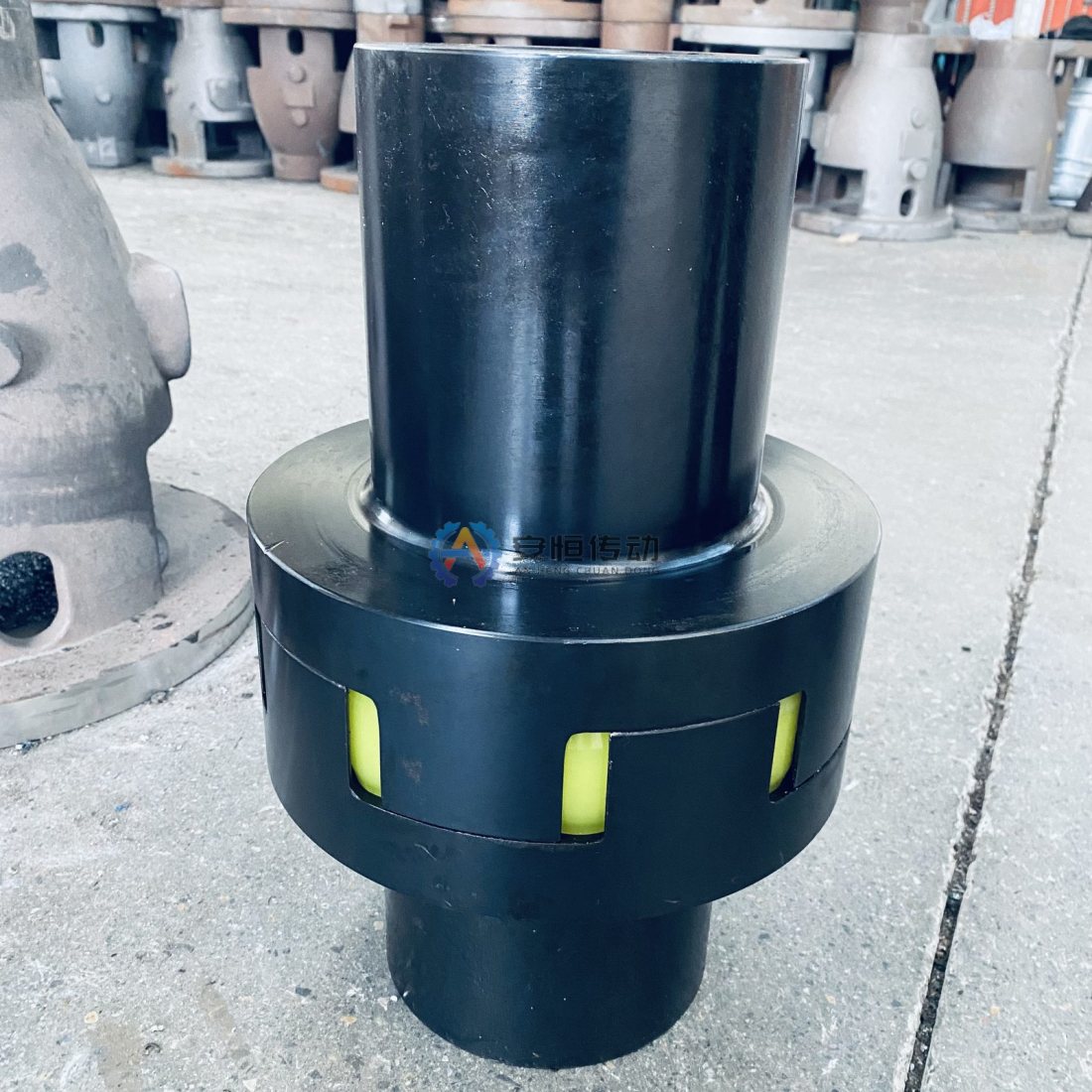
Why hubs seize on port equipment
Salt mist works its way into the gap between bore and shaft, and the rust that forms takes up more room than the steel it came from, so the fit gets tighter year by year. If the fit was loose, small movements under load cause fretting corrosion, which packs red oxide powder into the joint and the keyway.
Set screws rust into their threads, keys corrode into their keyways, and a fit that was tight to begin with leaves no room at all. On a Jaw Coupling the jaws are not a place to pull from, because they can break off long before a seized hub moves.
Preparing the removal
Lock out the drive, take off the guard and the spider, and record the hub position on the shaft and the gap between shaft ends so the new hub can go back in the same place. Then deal with everything that holds the hub besides rust:
- Remove the set screws; if they are seized, drill them out carefully without reaching the shaft.
- Clean the exposed shaft end and the hub faces, and remove paint and scale from the joint line.
- Soak penetrating oil into the joint and the keyway, and repeat over several hours or overnight if the schedule allows.
Expect the hub to bind once it starts moving if a set screw has raised a burr on the shaft. Keep the pull steady and keep feeding penetrant rather than switching to a hammer.
Pulling and heating without damaging the motor
Pull on the hub body, never on the jaws. A puller with its legs behind the hub face, or a split plate clamped behind the hub, spreads the load; a hydraulic puller gives controlled force, and a pad on the shaft centre protects it from the spindle.
A puller set up this way keeps the force within the hub and shaft end, so the motor bearings see little of it. What does reach the bearings is hammering on the hub or shaft and prying against the motor frame, which can dent the bearing races, so do neither.
If steady pull is not enough, heat the hub quickly and evenly around its outside while the puller holds tension, so the hub expands before the heat soaks into the shaft. Spread the heat rather than concentrating a flame on one spot, which can crack a cast hub, keep heat away from the motor bearing and seal, and check hub temperature with a thermometer or temperature crayons; the hub usually lets go with a jump as it expands.
When to cut the hub off, and what to check afterwards
Stop pulling when the puller reaches its rated force, when jaws or the hub start to crack, or when the shaft end begins to deform. At that point the hub is scrap anyway, and cutting it off is cheaper than a new motor shaft: saw or grind an axial slot through the hub wall almost down to the bore, then split the remaining material with a chisel, keeping well clear of the shaft.
With the hub off, clean the shaft and check it for pitting, scoring, a widened keyway and burrs, and measure the diameter at several points to see whether it is still round. Light marks can be dressed with fine abrasive; deep damage means repairing the shaft, and a new key is needed in any case.
Typical scenario: on a ship loader belt conveyor drive, a hub has sat on the motor shaft for years under spray, the set screws snap and the first puller bends. Cutting the hub off, dressing the shaft and ordering a new hub bored to the measured shaft is usually faster and safer than a second, bigger puller.
Refitting so it comes off next time
Bore the new hub to the measured shaft with the fit the drawing calls for and no tighter. Our hubs can be supplied with Y, J or Z (1:10 taper) bores to GB/T 3852 and keyways to your drawing, and tapped puller holes in the hub face can be added so a puller bolts on cleanly next time.
Then protect the fit and the parts around it. A few habits make the biggest difference:
- Apply a thin film of anti-seize to the bore and key, while keeping the fit and set screws as designed.
- Seal the joint line at the hub ends with a non-hardening sealant so spray cannot run into the fit.
- Coat set screw threads with anti-seize, or use stainless set screws.
- Keep the guard closed against spray but with drain holes, so water does not collect around the coupling.
The black oxide finish and rust-preventive oil we ship with protect the parts in transit, not through years of salt air, so plan a coating on site or ask for a surface finish suited to the position. For the worst positions, hubs in stainless steel 304 or 316 can be made to order.
There is no single right inspection interval for salt air. Start with short intervals after refitting, look for rust bleeding from the hub ends, seized set screws and guard damage, check after storms and wash-downs, and lengthen the interval once the findings stay clean.
FAQ
Can I knock the hub off with a hammer?
No. Hammer blows travel through the shaft into the motor bearings and can dent the races, and they can crack a cast hub or snap a jaw; use a puller and heat, or cut the hub off.
Should the motor bearings be checked after a hard removal?
If the hub was hammered, the motor was pried against, or heat reached the bearing housing, plan a bearing check. After restart, unusual noise or vibration is a clue worth following up together with the bearing condition, not proof of damage on its own.
Is a looser fit the answer to seizing?
Not on its own. A fit that is too loose lets the hub move under load, which causes fretting corrosion and seizes the joint in a different way; keep the designed fit and protect it against salt water instead.
Once the old hub is off, send us the shaft measurements, keyway dimensions, photos of the shaft and the old hub, and the motor nameplate. We make the LM Jaw Coupling from LM50 to LM400 to GB/T 5272-2017 with bores from 10 mm to 160 mm, bored to your measured shaft, with puller holes and surface finish to your drawing; standard sizes ship in as little as 10 days and copies made from an old part take from 20 days, urgent orders can be scheduled with priority, and a dimensional inspection report can be supplied with the shipment. Send us your drawing or the measured data, and we will confirm the bore, fit and finish for each position.
Need an engineering selection or replacement review?
Send power, speed, shaft diameters, keyway, installation dimensions, drawings or old-part photos. We will review the working condition before confirming the model and quotation.