Technical Articles
Cement Conveyor Coupling Selection: Dust, Start-Up Torque, and Service Factor
A cement conveyor coupling should be selected for loaded starts, dust, intermittent blockage, and the actual reducer output torque. The coupling is part of the conveyor protection chain; it should not be sized only from the motor nameplate or belt width.
Cement conveyor load profile before coupling selection
Belt conveyors, screw conveyors, and bucket elevators can start with material in the line. Dust affects seals and elastomers, while a blocked discharge can produce a short high torque. The coupling family should match whether damping, overload release, or simple flexible compensation is the main need.
Open engineering data for Cement Conveyor Coupling
Confirm conveyor type, belt or screw load, motor power, reducer ratio, start frequency, speed, shaft diameter, bore, keyway, DBSE, environmental dust, temperature, and guard clearance. Identify the likely blockage location and whether reverse operation is permitted.
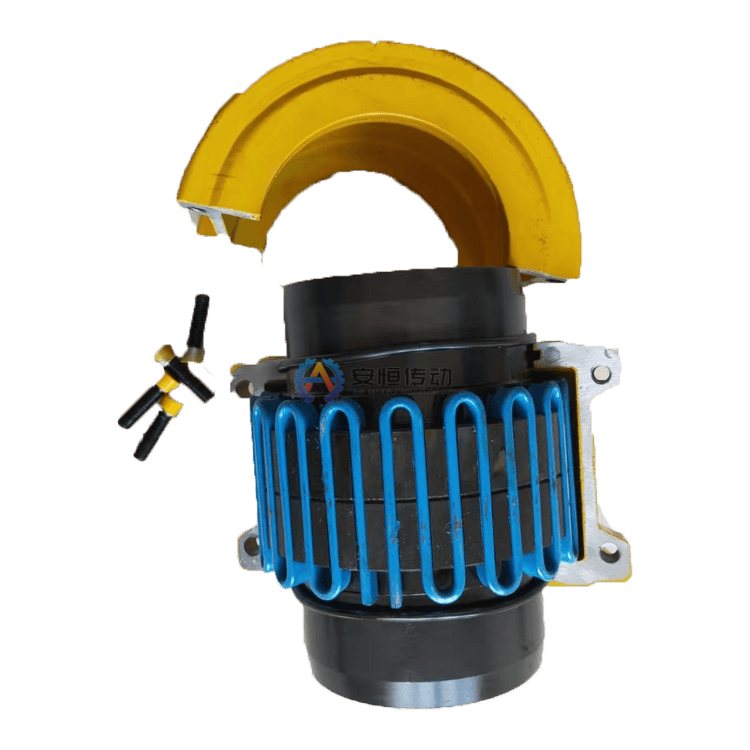
For cement conveyor, start with the Grid Coupling page. Use the custom replacement coupling page when the installed interface is no longer catalogue standard.
| Engineering input | Confirmation required |
|---|---|
| Load cycle | Continuous, start-up, reversing and blocked-load torque |
| Speed and movement | Normal speed, axial displacement and angular misalignment |
| Interface | Bore, keyway, hub length, DBSE and guard envelope |
| Environment | Temperature, dust, moisture, lubricant or elastomer exposure |
Use the event, not a copied service factor: Cement Conveyor Coupling
Use the reducer output torque for the normal condition and the blocked-start or loaded-start event for peak sizing. Check service factor, allowable speed, bore capacity, and element temperature. If an overload device is also installed, coordinate its setting with the coupling capacity.
For cement conveyor, the belt conveyor coupling selection guide is useful when the failure history suggests that the rating basis or transient load has been misunderstood.
Keep the evidence with the selection: Cement Conveyor Coupling
Clean the shaft ends and keep abrasive dust away from the fit. Set the DBSE and alignment before tightening. Inspect the seal or elastomer after the first loaded start and after any belt tracking or reducer replacement.
Set the boundary before approval: Cement Conveyor Coupling
Squealed elastomer, powder near the seal, loose fasteners, keyway fretting, and repeated overload trips are useful clues. A coupling that survives normal running but fails on restart usually needs a peak-torque review rather than a cosmetic replacement.
On a cement conveyor installation, do not replace the worn part before checking the shaft, keyway, bearings, guard and machine alignment. Read the damage as evidence, then check the surrounding machine before choosing the part.
Hand over a usable RFQ: Cement Conveyor Coupling
Send conveyor layout, motor and reducer data, loaded-start condition, speed, shaft drawing, bore and keyway, photos, quantity, and required guarding. A clear statement of the blockage scenario helps the supplier choose the right torque margin.
Two practical questions: Cement Conveyor Coupling
What must remain open before approval?
Keep torque, speed, bore, keyway, DBSE, movement and environment marked as site confirmation required until a drawing or measurement supports them.
Can motor power close the selection?
No. Motor power does not show the load event, shaft interface or movement at the installed position.
Send a reviewable engineering request: Cement Conveyor Coupling
For the “Cement Conveyor Coupling” review, send the equipment name, operating duty, available torque and speed data, shaft drawing or clear photos, quantity and delivery need through technical RFQ form. Keep measured values separate from estimates so the drawing review can see what is still open.
Need an engineering selection or replacement review?
Send power, speed, shaft diameters, keyway, installation dimensions, drawings or old-part photos. We will review the working condition before confirming the model and quotation.